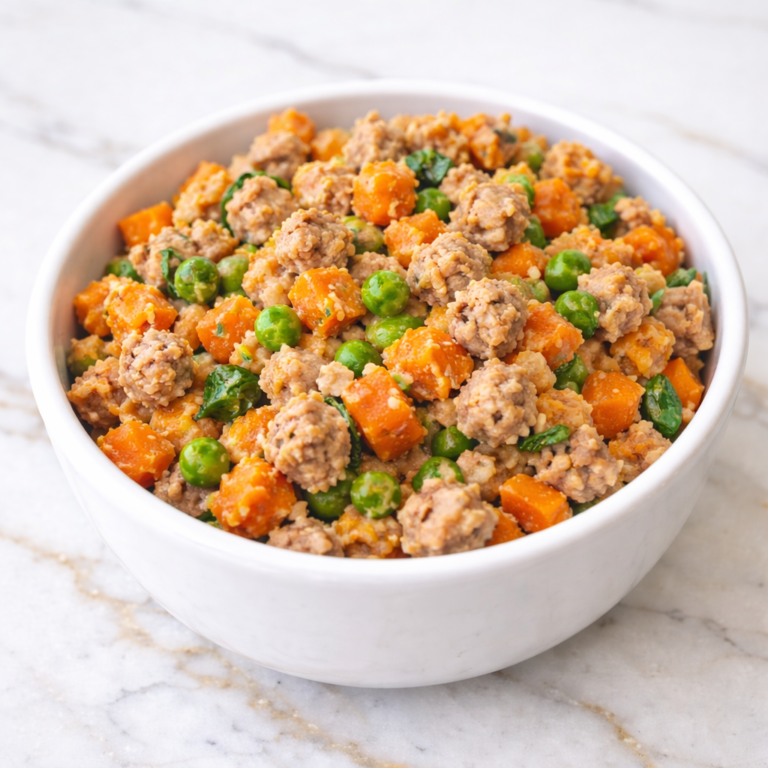
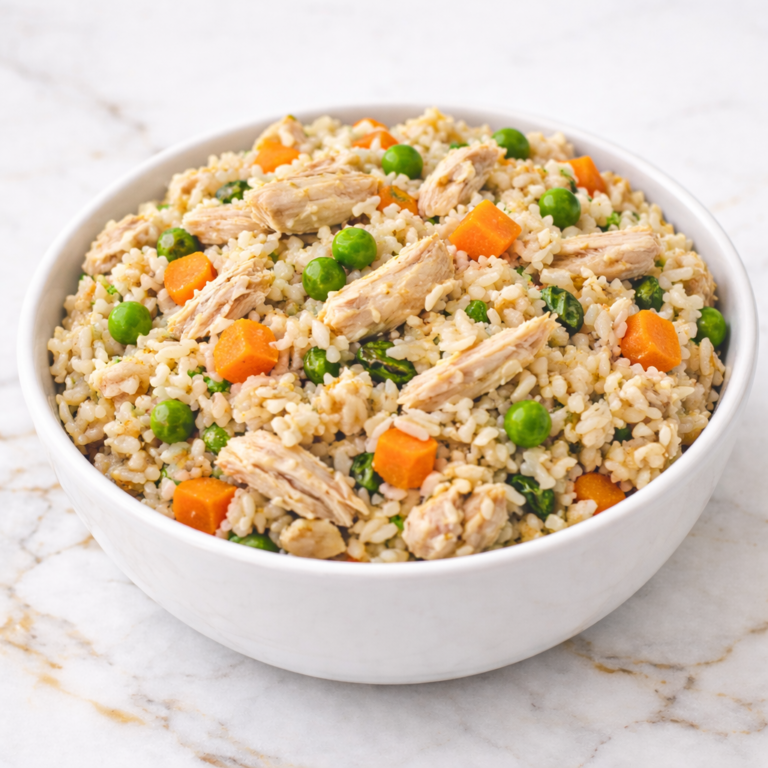
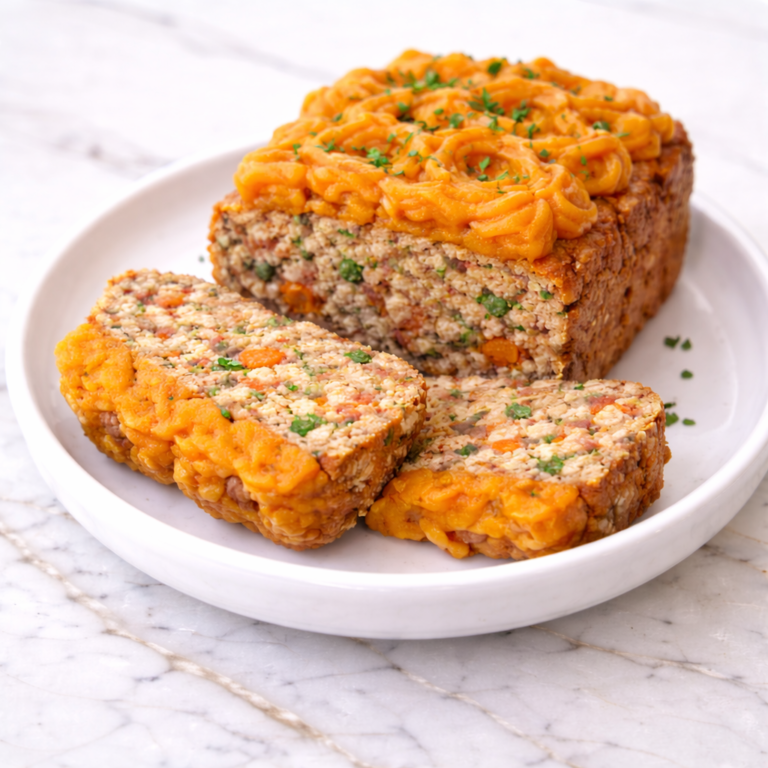
There is something especially refreshing about making homemade dog food that reflects the season you are in. When I prepare DIY Homemade Dog Food with Fresh Spring Vegetables, the process feels lighter and more intentional, focused on freshness, color, and simple preparation.
It is the kind of recipe that fits naturally into a routine when you want to refresh what you are offering without making things complicated.
Spring vegetables bring a different feel to homemade dog food. They are softer, cook quickly, and blend well into gentle, scoopable meals. Using fresh produce during this season makes the cooking process feel connected to what is available and familiar rather than relying on heavy or overly rich ingredients.
I usually make this recipe when transitioning between seasons or when I want a homemade option that feels especially clean and simple. It works well served on its own in rotation or mixed into regular meals as a topper. The texture holds up nicely during storage, which makes it practical for preparing ahead.
DIY Homemade Dog Food with Fresh Spring Vegetables fits naturally into a mindful approach to feeding. It is not meant to replace a long-term balanced diet without guidance, but to offer variety and care in a thoughtful way. More than anything, this recipe reflects intention, simplicity, and the quiet satisfaction of cooking with fresh ingredients.
Why This Recipe Is Great for Your Dog
This recipe uses a short list of recognizable, dog-friendly ingredients prepared plainly. Spring vegetables like zucchini, green beans, peas, and carrots are commonly used in homemade dog food because they cook evenly and blend well. Keeping ingredients simple helps maintain clarity and confidence.
The soft, scoopable texture makes this recipe easy to serve. It can be portioned precisely, mixed with other foods, or served on its own depending on your routine. This flexibility makes it practical for many feeding styles.
Preparation is straightforward and approachable. The entire recipe comes together on the stovetop with minimal steps and no special equipment. It is easy to prepare regularly without feeling overwhelming.
Dogs often respond well to the mild aroma and familiar texture of lightly cooked vegetables combined with simple protein. The flavor is noticeable without being strong. This balance helps the food feel appealing while remaining suitable for rotation.
Ingredients
- 2 pounds ground chicken or turkey
- 1½ cups zucchini, finely chopped
- 1 cup carrots, finely chopped
- 1 cup green beans, finely chopped
- ½ cup peas
- 1 cup cooked brown rice
- ½ cup water
Tools You’ll Need
- Large skillet or sauté pan
- Wooden spoon or spatula
- Knife and cutting board
- Measuring cups
- Measuring spoons
- Mixing spoon
- Storage containers
Pro Tips
Choose lean ground meat for best results. Lean protein cooks evenly and prevents excess grease from collecting in the pan.
Chop all vegetables into small, even pieces. Smaller pieces cook faster and blend more smoothly into the finished food.
Cook vegetables gently rather than aggressively. Light cooking preserves texture and prevents mushiness.
Have all ingredients prepped before turning on the stove. This keeps the cooking process calm and controlled.
Allow the food to cool completely before storing. Cooling prevents condensation and helps preserve texture.
How Long This Recipe Takes
Preparation time for homemade dog food with spring vegetables is relaxed and manageable. Washing and chopping vegetables and measuring ingredients usually takes about twenty-five minutes. Working at a steady pace keeps the process enjoyable.
Cooking time typically takes about thirty minutes from start to finish. The meat should be fully cooked, and the vegetables should be soft but not overcooked.
Cooling time should always be included. Allow at least thirty minutes for the food to cool completely before storing. From start to finish, plan for about one hour and twenty-five minutes.
Make-Ahead Tips
This recipe is ideal for make-ahead preparation. Cooking a batch in advance ensures you always have homemade food ready to serve. This supports consistency in feeding routines.
Once cooled, the food can be portioned into daily servings and stored in the refrigerator. This makes mealtime quick and simple.
Freezing works very well for longer storage. Freeze portions in airtight containers or freezer-safe bags for easy thawing.
Always thaw frozen portions in the refrigerator. Slow thawing helps preserve texture and moisture.
Step-by-Step Instructions
Step 1: Prepare the Vegetables
Wash and finely chop the zucchini, carrots, green beans, and peas. Measure all ingredients before cooking to keep the process smooth.
Step 2: Cook the Meat
Place the ground chicken or turkey in a large skillet over medium heat. Cook gently, breaking it up with a spoon, until fully cooked through.
Step 3: Add the Vegetables
Add the chopped vegetables to the cooked meat. Stir gently to combine and allow the vegetables to soften.
Step 4: Add Rice and Water
Stir in the cooked brown rice and water. Mix until all ingredients are evenly distributed.
Step 5: Simmer
Reduce heat to low and let the mixture simmer for about ten minutes. This allows moisture to distribute evenly and flavors to blend gently.
Step 6: Check Texture
The mixture should be soft and scoopable. If it feels too dry, add a small amount of water and stir gently.
Step 7: Cool Completely
Remove the pan from heat and allow the food to cool fully before serving or storing.
Step 8: Portion and Store
Once cooled, portion the food into containers appropriate for your dog’s size and feeding routine.
Nutritional Notes for Dogs
This recipe is intended as an occasional homemade option rather than a complete long-term diet. It adds variety and freshness without replacing balanced nutrition. Portion size matters.
Lean protein provides structure, while spring vegetables contribute moisture and texture. Rice helps bind the mixture and create consistency.
Every dog responds differently to homemade food. Introduce spring vegetable dog food gradually and observe tolerance. Adjust portions as needed.
Ingredient Swaps and Variations
- Protein swap: Use ground turkey, chicken, or lean beef.
- Grain-free: Replace brown rice with mashed sweet potato.
- Vegetable swap: Replace peas with chopped spinach or pumpkin.
- Texture adjustment: Add extra water for a softer consistency.
- Small batch: Halve the recipe for smaller households.
How to Serve Safely
Serve homemade dog food in portions appropriate for your dog’s size, age, and activity level. Smaller dogs need smaller scoops, while larger dogs may require more.
Always serve the food fully cooled. Warm food can affect portion accuracy and texture.
This recipe can be served alone or mixed with regular kibble. It should complement your dog’s usual feeding routine.
Balance homemade meals with regular feeding plans. Moderation supports consistency and comfort.
Common Mistakes to Avoid
Using high-fat meat can result in excess grease. Lean meat works best for this recipe.
Cutting vegetables too large can lead to uneven texture. Finely chopped vegetables blend better.
Overcooking vegetables can create a mushy texture. Gentle simmering preserves structure.
Skipping cooling time before storage can cause moisture buildup. Always cool completely.
Improper portioning can lead to overfeeding. Measure servings carefully.
Storage and Freshness Tips
Store homemade dog food with spring vegetables in airtight containers in the refrigerator for up to four days. Inspect before serving.
Frozen portions can last up to three months. Label containers with dates for easy rotation.
Discard any food that develops unusual odor, visible mold, or excess moisture. Safety should always come first.
Store portions separately for easy thawing and serving. Organization helps maintain freshness.
FAQs
Can puppies eat homemade dog food with spring vegetables
Puppies can have very small portions if ingredients are familiar. Introduce gradually and supervise closely.
How often can I serve this homemade food
This recipe should be served occasionally or in rotation, not as a permanent diet without guidance.
Are spring vegetables safe for dogs
Spring vegetables like zucchini, carrots, green beans, and peas are safe when prepared plainly and cooked lightly.
Can I mix this with kibble
Yes, mixing small amounts with regular food works well and helps with portion control.
Can I freeze this recipe
Yes, freezing works very well and helps extend shelf life.
Should I drain the meat
Lean meat usually does not require draining. Stir any natural moisture back into the mixture once cooled.
Can I make smaller portions
Yes, dividing into individual servings before freezing is recommended.
Ready to Cook a Fresh, Seasonal Meal for Your Dog
DIY Homemade Dog Food with Fresh Spring Vegetables offers a calm, practical way to bring seasonal freshness into your dog’s feeding routine. With familiar ingredients, a straightforward cooking process, and flexible serving options, it fits naturally into thoughtful meal planning.
Whether served on rotation, mixed with regular food, or prepared ahead for busy days, this recipe reflects care, balance, and the simple satisfaction of cooking with intention.