There is something especially calming about making dehydrated dog treats at home. The process is slow, steady, and predictable, and it encourages patience rather than speed.
When I prepare homemade dehydrated treats, the kitchen feels quiet and purposeful, with no rush and no complicated steps.
These recipes grew out of wanting treats that feel simple, durable, and transparent. Dehydrated dog treats rely on removing moisture rather than adding ingredients, which keeps the focus on what you start with. That clarity is often what draws people to dehydrating in the first place.
I often make dehydrated treats when I want long-lasting rewards that store well and fit easily into daily routines. They work for training, enrichment, or occasional rewards without needing refrigeration right away. The consistency and shelf stability make them especially practical.
Homemade Dehydrated Dog Treat Recipes fit naturally into a mindful approach to treat-making. They emphasize preparation, patience, and simplicity rather than novelty. More than anything, they reflect the idea that careful handling and time can transform everyday ingredients into something useful and intentional.
Why Dehydrated Treats Are Great for Your Dog
Dehydrated treats use very few ingredients, often just one. This simplicity makes it easier to understand exactly what your dog is eating. There are no fillers, binders, or added flavors involved.
The texture of dehydrated treats ranges from chewy to crisp depending on thickness and drying time. This variety allows you to adjust treats for different preferences and chewing styles. Texture control is one of the biggest benefits of dehydrating.
Preparation is straightforward once the process is familiar. Slicing, arranging, and drying become routine with practice. The method itself is repeatable and forgiving.
Dogs often enjoy dehydrated treats because of their concentrated aroma and natural flavor. The appeal comes from the ingredient itself rather than added seasoning. This keeps treats simple and focused.
Ingredients
These recipes are based on single-ingredient dehydration. Choose one or more of the following:
- 2–3 pounds lean beef (eye of round, top round, or sirloin)
- 2–3 pounds boneless, skinless chicken breast
- 2–3 pounds boneless, skinless turkey breast
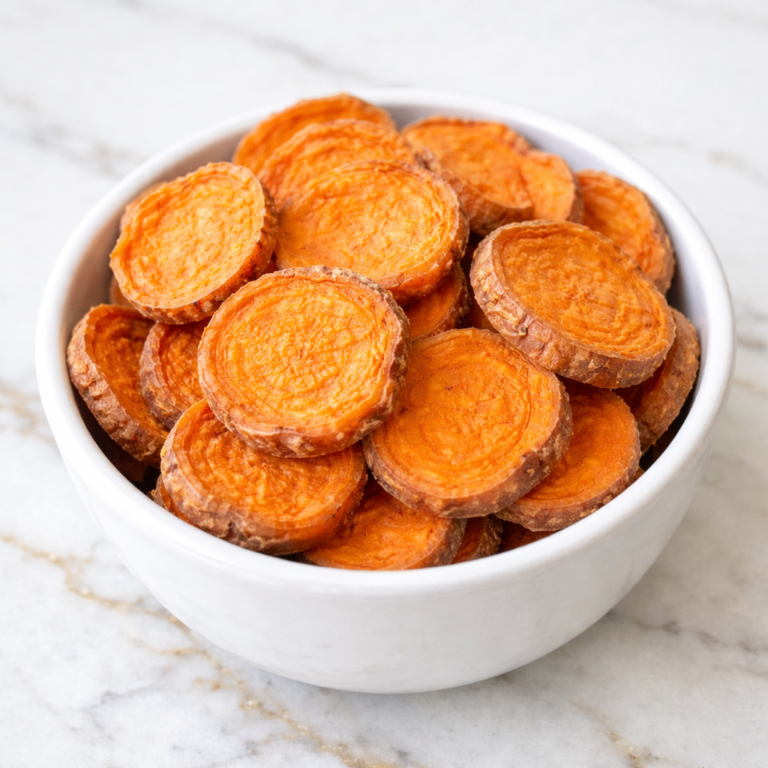
- 3–4 large sweet potatoes
- 3–4 large carrots
Tools You’ll Need
- Sharp knife
- Cutting board
- Paper towels
- Baking sheets or dehydrator trays
- Parchment paper or wire racks
- Oven or food dehydrator
- Airtight storage containers
Pro Tips
Choose the freshest ingredients possible. Dehydration preserves food but does not improve quality. Starting with fresh ingredients matters.
Slice all ingredients as evenly as possible. Uniform thickness ensures consistent drying and prevents some pieces from overdrying. Consistency improves results.
Lean proteins work best for dehydrating. Fat does not dehydrate well and can shorten shelf life. Trim visible fat carefully.
Pat ingredients dry before dehydrating. Removing surface moisture speeds up the process and improves texture. This step is especially helpful for meats.
Allow all treats to cool completely before storing. Cooling helps moisture redistribute and prevents condensation. This protects shelf life.
How Long These Recipes Take
Preparation time depends on how many ingredients you are working with. Washing, trimming, and slicing typically takes thirty to forty minutes. Taking your time improves uniformity.
Drying time varies based on ingredient and thickness. Meats usually take four to six hours, while vegetables may take three to five hours. Dehydrators are often more consistent than ovens.
Cooling time should always be included. Allow at least thirty minutes for treats to cool fully. From start to finish, plan for five to seven hours depending on batch size.
Make-Ahead Tips
Dehydrated treats are ideal for make-ahead preparation. Once fully dried and cooled, they store well and remain stable. This makes them convenient for long-term use.
Prepare larger batches and divide them into smaller containers. This limits air exposure each time you open storage. Rotation helps maintain freshness.
Freezing dehydrated treats can extend shelf life even further. Freeze in airtight containers and thaw at room temperature. Texture remains stable.
Never store treats while warm. Trapped heat can introduce moisture and reduce shelf life. Cooling is essential.
Step-by-Step Instructions
Step 1: Select and Prepare Ingredients
Choose one ingredient type per batch for even drying. Wash vegetables thoroughly. Trim all visible fat from meats.
Step 2: Slice Evenly
Slice meats into strips about one-eighth to one-quarter inch thick. Slice vegetables into thin, even rounds or strips. Uniform size is important.
Step 3: Pat Dry
Use paper towels to pat all slices dry. Remove as much surface moisture as possible. This improves drying efficiency.
Step 4: Arrange on Trays
Line baking sheets or dehydrator trays with parchment paper or wire racks. Arrange slices in a single layer without overlapping.
Step 5: Begin Dehydrating
If using an oven, preheat to the lowest setting, usually 165–170°F (74–77°C). Place trays inside and prop the door slightly open. If using a dehydrator, set according to manufacturer instructions.
Step 6: Rotate and Monitor
Rotate trays every hour if using an oven. Check texture regularly. Remove finished pieces as needed to avoid overdrying.
Step 7: Check Doneness
Meat treats should be dry and pliable with no visible moisture. Vegetable treats should be firm and dry throughout. Texture is the best indicator.
Step 8: Cool Completely
Remove treats from heat and allow them to cool fully at room temperature. Do not store until completely cooled.
Nutritional Notes for Dogs
Dehydrated treats are concentrated versions of their original ingredients. Small portions go a long way. They should always be given in moderation.
These treats are meant to complement a balanced diet, not replace meals. Treat intake should be factored into daily routines. Balance matters.
Each dog responds differently to protein and fiber sources. Introduce new treats gradually and observe tolerance. Adjust frequency as needed.
Ingredient Swaps and Variations
- Protein swap: Use chicken, turkey, or beef depending on preference.
- Vegetable option: Dehydrate zucchini or green beans for lighter treats.
- Texture change: Slice thinner for crisp treats or thicker for chewy ones.
- Training size: Cut strips into small pieces after drying.
- Mixed batches: Store different treats separately to maintain texture.
How to Serve Safely
Serve dehydrated treats in portions appropriate for your dog’s size. Small dogs need very small pieces. Larger dogs can handle slightly larger portions.
Always supervise when offering chewy treats. Observe how your dog chews and adjust size if needed. Break pieces apart when appropriate.
Use dehydrated treats as rewards or enrichment rather than frequent snacks. Their concentrated nature makes moderation important.
Offer treats during calm moments. Dehydrated treats encourage slower chewing, which suits relaxed settings best.
Common Mistakes to Avoid
Using fatty cuts of meat can shorten shelf life. Always choose lean proteins. Fat affects stability.
Slicing unevenly leads to inconsistent drying. Some pieces may overdry while others remain moist. Uniformity matters.
Drying at too high a temperature can cook rather than dehydrate ingredients. Keep temperatures low and steady. Patience is key.
Storing treats before they are fully cooled can trap moisture. Always cool completely. Proper handling protects quality.
Overfeeding dehydrated treats can disrupt balance. Treats should remain occasional. Portion control matters.
Storage and Freshness Tips
Store dehydrated treats in airtight containers in a cool, dry place for up to one week. Refrigeration extends freshness to two weeks.
Frozen dehydrated treats can last up to three months. Label containers with dates for easy rotation. Thaw at room temperature before serving.
Discard treats that develop an off odor, visible mold, or moisture. Safety should always come first.
Avoid storing treats in humid environments. Dry conditions preserve texture and shelf life.
FAQs
Can puppies eat dehydrated dog treats
Puppies can have very small pieces if textures are appropriate. Supervise closely and offer sparingly. Chewing ability matters.
How often can I give dehydrated treats
Dehydrated treats should be given occasionally as rewards. They are not meant for daily frequent feeding. Balance supports routine.
Are dehydrated treats better than baked treats
Both have their place. Dehydrated treats last longer and use fewer ingredients. Choice depends on routine and preference.
Can I dehydrate multiple ingredients at once
It is best to dehydrate similar ingredients together. Different moisture levels affect drying time. Separate batches work best.
How do I know treats are fully dehydrated
Treats should show no visible moisture and feel dry throughout. Meat should bend without snapping. Texture is the key guide.
Can I use a dehydrator instead of an oven
Yes, dehydrators work very well and offer consistent airflow. Follow manufacturer instructions for best results.
Should dehydrated treats be refrigerated
Refrigeration extends shelf life, especially for meat treats. Airtight storage is important regardless of location.
Ready to Make Simple, Lasting Treats at Home
Homemade Dehydrated Dog Treat Recipes offer a calm, reliable way to create long-lasting rewards using minimal ingredients. With patience, careful slicing, and proper storage, dehydrating becomes an approachable and repeatable process.
Whether you choose meat or vegetables, these treats reflect thoughtful preparation, simplicity, and the steady care that supports everyday routines.