
Bone Broth Dog Meal Topper is a simple homemade addition that can make your dog’s regular meals feel a little more thoughtful. I enjoy preparing recipes like this because they are gentle, practical, and easy to portion into everyday feeding routines.
There is something calming about making a slow-simmered topper with plain, dog-appropriate ingredients. It gives you control over what goes into the pot while keeping the final result simple and useful.
This recipe is not meant to replace your dog’s regular food. It is a small complementary topper that can be spooned over meals to add moisture, aroma, and variety.
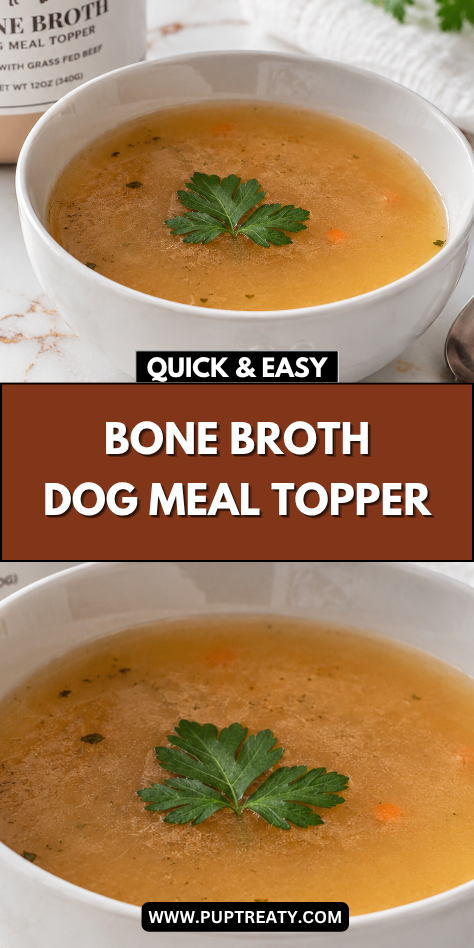
I like using this type of recipe when I want to make mealtime feel more cared for without changing the whole bowl. A small amount of broth can soften dry food, add a savory smell, and create a gentle routine around feeding.
Bone broth also works well for batch preparation. Once it is cooled, strained, and portioned, you can refrigerate or freeze small servings for easy use during the week.
Why This Recipe Is Great for Your Dog
This recipe uses simple ingredients that are easy to recognize. Plain bones, water, carrot, celery, and a small amount of apple cider vinegar are simmered slowly and then strained carefully.
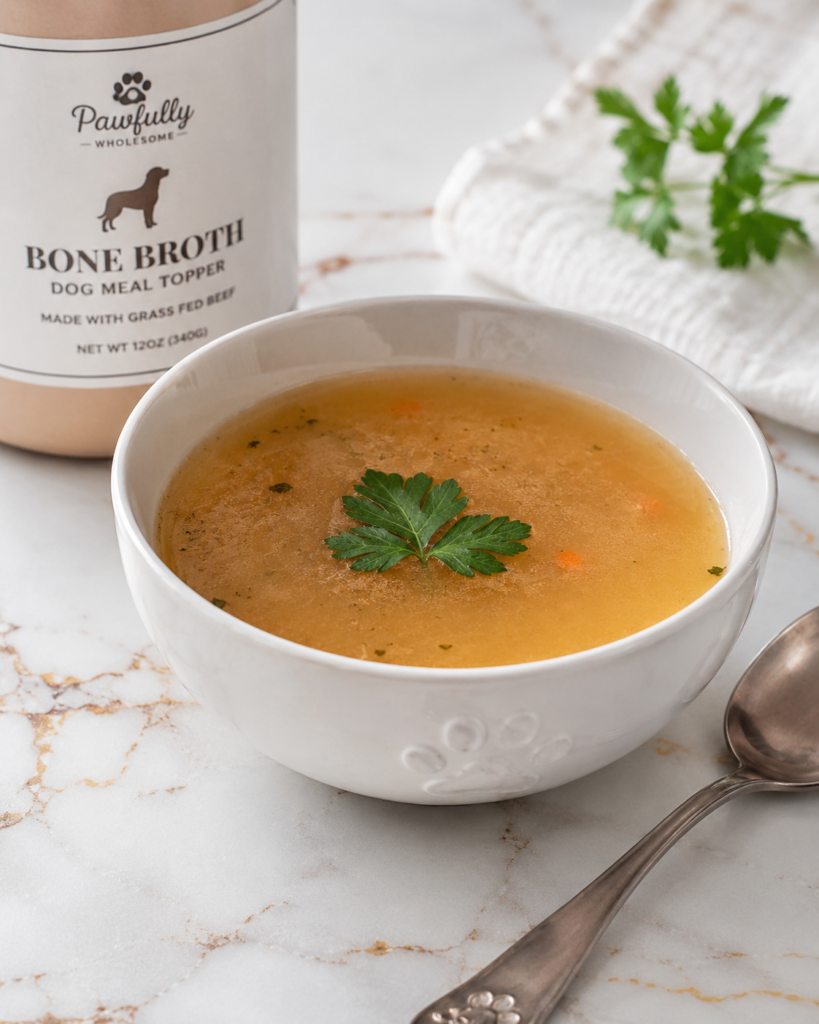
The texture is smooth and pourable once the broth is finished. It can be served as a light meal topper, frozen into small cubes, or warmed gently before being added to your dog’s regular food.
The preparation is very beginner-friendly, but it does take time. Most of the recipe is hands-off while the broth simmers slowly and develops a mild savory aroma.
Dogs often enjoy the smell of plain meat-based broth. Even a small spoonful can make a familiar meal feel more interesting without using rich sauces or seasonings.
This topper is also easy to portion for different dogs. Small dogs may need only a teaspoon or two, while larger dogs may use a slightly larger spoonful.
The best part is how flexible it is for routine feeding. You can make a batch, freeze it in small portions, and use it as needed without preparing something new each day.
Ingredients
- 2 pounds raw or cooked beef, chicken, or turkey bones
- 8 cups water
- 1 medium carrot, chopped
- 1 celery stalk, chopped
- 1 tablespoon apple cider vinegar
- 1/2 cup plain cooked chicken or turkey, optional
Tools You’ll Need
- Large stockpot or slow cooker
- Cutting board
- Knife
- Measuring cups
- Measuring spoons
- Wooden spoon
- Fine mesh strainer
- Large heat-safe bowl
- Ladle
- Airtight glass jars or containers
- Ice cube tray
- Freezer-safe bag or container
- Refrigerator-safe storage container
Pro Tips
Use only plain bones without seasoning, sauces, or marinades. Avoid bones cooked with garlic, onion, salt-heavy rubs, or spice blends.
Strain the broth very carefully before storing or serving. No cooked bones, bone fragments, vegetable pieces, or hard bits should remain in the finished topper.
Skim off excess fat after chilling. Once the broth cools in the refrigerator, fat often rises to the top and becomes easier to remove.
Keep the topper plain and simple. Dogs do not need added salt, onion, garlic, butter, or seasoning in homemade broth.
Portion the broth into small amounts before freezing. Ice cube trays make it easier to thaw only what you need for one or two meals.
Cool the broth fully before storing it. Placing hot broth directly into sealed containers can trap steam and affect freshness.
How Long This Recipe Takes
Preparation takes about 10 to 15 minutes. This includes placing the bones in the pot, chopping the carrot and celery, measuring the water, and adding the apple cider vinegar.
Simmering time depends on the method you choose. On the stovetop, the broth usually simmers for 8 to 12 hours, while a slow cooker can run on low for 12 to 18 hours.
Straining and cooling take extra time after cooking. Plan for at least 30 to 60 minutes to strain the broth safely and let it cool enough for storage.
The full recipe takes most of the day, but it is not a difficult recipe. Once the ingredients are in the pot, the process is mostly slow cooking, cooling, straining, and portioning.
This is a good recipe to make when you are already at home. It gives you enough time to check the pot, add water if needed, and handle the broth safely after cooking.
Make-Ahead Tips
Bone Broth Dog Meal Topper is ideal for make-ahead prep because it freezes well in small portions. You can prepare a full batch once and use it gradually over several weeks.
For batch preparation, strain the broth first and cool it completely. Then portion it into jars for the refrigerator or ice cube trays for the freezer.
Refrigeration works well for short-term use. Keep the broth in a sealed container and use it within a few days.
Freezing is helpful when you want longer storage. Pour cooled broth into ice cube trays, freeze until solid, and move the cubes into a freezer-safe bag or container.
Thaw frozen broth cubes in the refrigerator before using. You can also warm a thawed portion gently, but it should be only slightly warm before serving.
Avoid thawing and refreezing the same portion repeatedly. Smaller frozen servings make it easier to use only what your dog needs.
Step-by-Step Instructions
Step 1: Choose Plain Bones
Select plain beef, chicken, or turkey bones without seasoning. They should not be coated in sauces, marinades, garlic, onion, or salty spice blends.
Raw or cooked bones can be used for making broth, but they must never be served to your dog after simmering. The bones are only for flavoring the liquid and must be removed completely.
Step 2: Place Bones in the Pot
Add the bones to a large stockpot or slow cooker. Spread them out so they sit in an even layer at the bottom.
This helps the water cover the bones more easily. It also allows the broth to simmer steadily.
Step 3: Add the Water
Pour 8 cups of water over the bones. The bones should be mostly covered, with enough room at the top of the pot to prevent overflow.
If needed, add a little more water to cover the bones. Avoid filling the pot too high, especially if using a stovetop method.
Step 4: Add the Vegetables
Add the chopped carrot and celery to the pot. Keep the pieces simple and plain, with no seasoning or added oil.
These vegetables are used to gently flavor the broth. They will be strained out before the broth is stored or served.
Step 5: Add Apple Cider Vinegar
Add 1 tablespoon of apple cider vinegar to the pot. Stir gently to combine it with the water.
The amount is small and should not make the broth taste sharp. It is included as part of the slow simmering process.
Step 6: Bring to a Gentle Simmer
If using the stovetop, place the pot over medium heat until the liquid begins to simmer. Reduce the heat to low once small bubbles appear.
Avoid a hard boil. A gentle simmer helps the broth cook slowly and keeps the liquid from reducing too quickly.
Step 7: Cook Slowly
Simmer the broth on low for 8 to 12 hours on the stovetop. If using a slow cooker, cook on low for 12 to 18 hours.
Check the liquid level occasionally if using the stovetop. Add a little water if the bones become exposed during cooking.
Step 8: Add Optional Plain Meat
If using plain cooked chicken or turkey, add it during the final 30 minutes of cooking. This gives the broth a little extra savory aroma.
Do not add seasoned meat. Use only plain meat with no skin, bones, sauces, or spice blends.
Step 9: Turn Off the Heat
Turn off the heat once the broth has finished simmering. Let it sit until it is cool enough to handle safely.
Do not rush this step. Hot broth can spill easily and should be handled with care.
Step 10: Strain the Broth
Place a fine mesh strainer over a large heat-safe bowl. Carefully ladle or pour the broth through the strainer.
Discard all bones, vegetables, and solids after straining. No bone pieces or cooked bones should remain in the finished topper.
Step 11: Cool and Skim
Let the strained broth cool, then refrigerate it until the fat rises and firms on top. Skim off the firm fat layer before portioning.
This gives the topper a cleaner texture. It also makes it easier to spoon or freeze into small servings.
Step 12: Portion and Store
Pour the cooled broth into small jars or ice cube trays. Keep a few portions in the refrigerator and freeze the rest for later.
Label the containers with the date. This helps you track freshness and use each batch safely.
Nutritional Notes for Dogs
Bone Broth Dog Meal Topper is meant to be served as a small addition to your dog’s regular food. It is not a complete meal and should not replace a balanced daily diet.
The main role of this topper is to add moisture, aroma, and gentle variety to your dog’s bowl. A small spoonful can help soften dry food and make mealtime feel a little more thoughtful.
Plain bones are used only to make the broth and should always be removed before serving. Cooked bones should never be left in the finished topper because they can break into sharp pieces.
The carrot and celery in this recipe are used to gently flavor the broth while it simmers. They should be strained out with the bones and other solids before storage.
If you add plain cooked chicken or turkey, keep the amount small and simple. It should be unseasoned, skinless, boneless, and free from sauces or spice blends.
Moderation is important with any meal topper. Too much broth can change the texture of your dog’s regular meal or add more food than intended.
A balanced feeding routine helps keep this recipe in the right place. Think of bone broth as a small supportive extra for variety, not as the main part of the bowl.
If your dog is trying bone broth for the first time, start with a small amount. Watch how your dog responds before adding it more often.
Ingredient Swaps and Variations
- Dairy-free: This recipe is naturally dairy-free as written, so no dairy swap is needed.
- Grain-free: This recipe is naturally grain-free because it does not include oats, wheat, rice, or other grains.
- Flavor variation: Use plain turkey bones, chicken bones, or beef bones depending on what you have available.
- Texture adjustment: Chill the broth until it becomes slightly gelled, or add a little warm water for a thinner pourable texture.
- Mini version: Freeze the broth in small ice cube trays for tiny portions suited to small dogs or light meal topping.
How to Serve Safely
Serve Bone Broth Dog Meal Topper in small portions based on your dog’s size. Small dogs may only need 1 to 2 teaspoons, while larger dogs may use 1 to 2 tablespoons over a meal.
Add the broth to your dog’s regular food rather than serving a large bowl on its own. This keeps the topper as part of a normal feeding routine.
Make sure the broth is cool or only slightly warm before serving. Hot broth can burn your dog’s mouth, even if it feels only warm on the outside of the bowl.
Always check that the broth has been fully strained. No bones, bone fragments, vegetable pieces, or hard bits should remain in the finished topper.
Use supervision when serving any new food addition. Watch your dog’s pace and comfort, especially if the broth changes the texture of their usual meal.
This topper works well for everyday variety, gentle meal softening, or a small addition after a busy day. It should still be used occasionally and in controlled amounts.
Avoid serving broth that has been seasoned for humans. Broths made with garlic, onion, heavy salt, sauces, or spice blends should not be used for dogs.
Common Mistakes to Avoid
Leaving bones in the finished broth is the most important mistake to avoid. Strain carefully and discard all bones, cooked pieces, and hard fragments before storing or serving.
Using seasoned bones or leftover roasted bones from heavily seasoned meals can make the broth unsuitable. Choose plain bones without garlic, onion, salty rubs, sauces, or marinades.
Skipping the fat-skimming step can leave the broth too rich. Chilling the broth makes it easier to remove the firm fat layer from the top.
Boiling the broth too hard can reduce the liquid quickly and make the process harder to control. A gentle simmer is better for slow cooking and steady results.
Adding too many vegetables can make the recipe less simple. Keep the ingredients limited and always strain the solids out before serving.
Serving the broth while it is too hot can be unsafe. Let it cool fully or warm it only gently before adding it to your dog’s bowl.
Freezing broth in large containers can make portioning difficult. Use small jars or ice cube trays so you can thaw only what you need.
Leaving thawed broth out for too long can affect freshness. Keep thawed portions refrigerated and use them within a short time.
Forgetting to label the container can make storage harder to track. Add the date before refrigerating or freezing each batch.
Using broth as a meal replacement is not the right approach. It should be a small topper served with regular balanced food.
Storage and Freshness Tips
Store cooled Bone Broth Dog Meal Topper in an airtight container in the refrigerator. Use refrigerated broth within 3 to 4 days for the best freshness.
Keep the container sealed between servings. Use a clean spoon each time so the broth stays fresh and does not pick up crumbs or food bits.
Room-temperature storage is not recommended for this recipe. Bone broth should be chilled after cooling because it is a moist homemade food.
For longer storage, freeze the broth in small portions. Ice cube trays are useful because they create easy serving sizes for meal topping.
Once the cubes are frozen solid, transfer them to a freezer-safe bag or container. Label the bag with the date so you know when the batch was made.
Frozen broth can be stored for up to 2 months. Smaller portions help you avoid thawing more than your dog needs.
Thaw frozen broth in the refrigerator before serving. You can warm it gently after thawing, but it should not be hot when added to food.
Check the broth before using it. Discard it if it smells sour, looks cloudy in an unusual way, feels slimy, or shows mold.
If the broth separates after chilling, that is common. Skim off excess fat and stir the broth gently before portioning or serving.
FAQs
Can dogs have bone broth as a meal topper?
Yes, many dogs can have plain bone broth as a small meal topper. It should be fully strained, unseasoned, and served in moderation with regular food.
Can I leave bones in the bowl?
No, bones should never be left in the finished topper. Strain the broth carefully and discard all bones and solids before serving.
How much bone broth should I give my dog?
Start with a small amount based on your dog’s size. Small dogs may need 1 to 2 teaspoons, while larger dogs may use 1 to 2 tablespoons.
Can I use store-bought broth?
Only use store-bought broth if it is plain and free from onion, garlic, heavy salt, and seasoning. Many human broths are not suitable for dogs.
Does bone broth need to be refrigerated?
Yes, homemade bone broth should be refrigerated after cooling. Use it within 3 to 4 days or freeze small portions for longer storage.
Can I freeze bone broth for dogs?
Yes, bone broth freezes well in small portions. Ice cube trays make it easy to thaw only what you need.
Why did my broth turn jelly-like?
Broth can become gelled after chilling, depending on the bones used and cooking time. This texture is normal, and you can thin it with a little warm water if needed.
A Gentle Broth Topper for Everyday Meals
Bone Broth Dog Meal Topper is a simple homemade way to add moisture and savory aroma to your dog’s regular bowl. With careful straining, small portions, and safe storage, it can fit naturally into calm feeding routines while keeping mealtime practical, balanced, and thoughtfully prepared.