
I enjoy making Bone Broth Frozen Dog Treats because they are simple, soothing, and easy to prepare with very little active work. They feel especially useful during warm days when a cool savory treat can fit naturally into a quiet routine.
This recipe feels thoughtful because it turns plain dog-appropriate bone broth into small, portioned frozen treats. The process is calm and practical, and the finished cubes can be stored in the freezer for occasional serving.
These frozen treats fit well into everyday dog care when offered in moderation. They can be served after a walk, during a rest period, or as a small cool snack when your dog needs a slower treat moment.
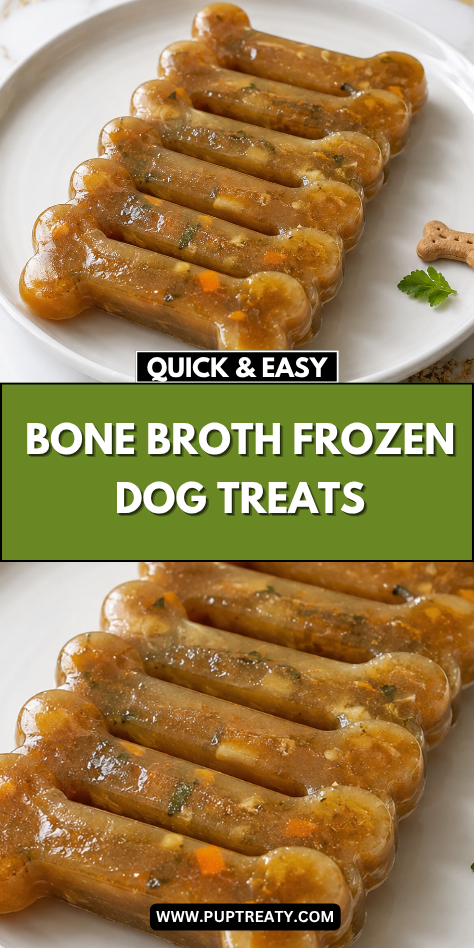
I also like that frozen broth treats encourage many dogs to lick and nibble rather than eat quickly. That slower pace can make treat time feel more relaxed and engaging.
Homemade treats like these are meant to complement your dog’s regular balanced meals. They are not a full diet replacement, but they can add a simple savory option to occasional treat routines when your dog tolerates the ingredients well.
Why This Recipe Is Great for Your Dog
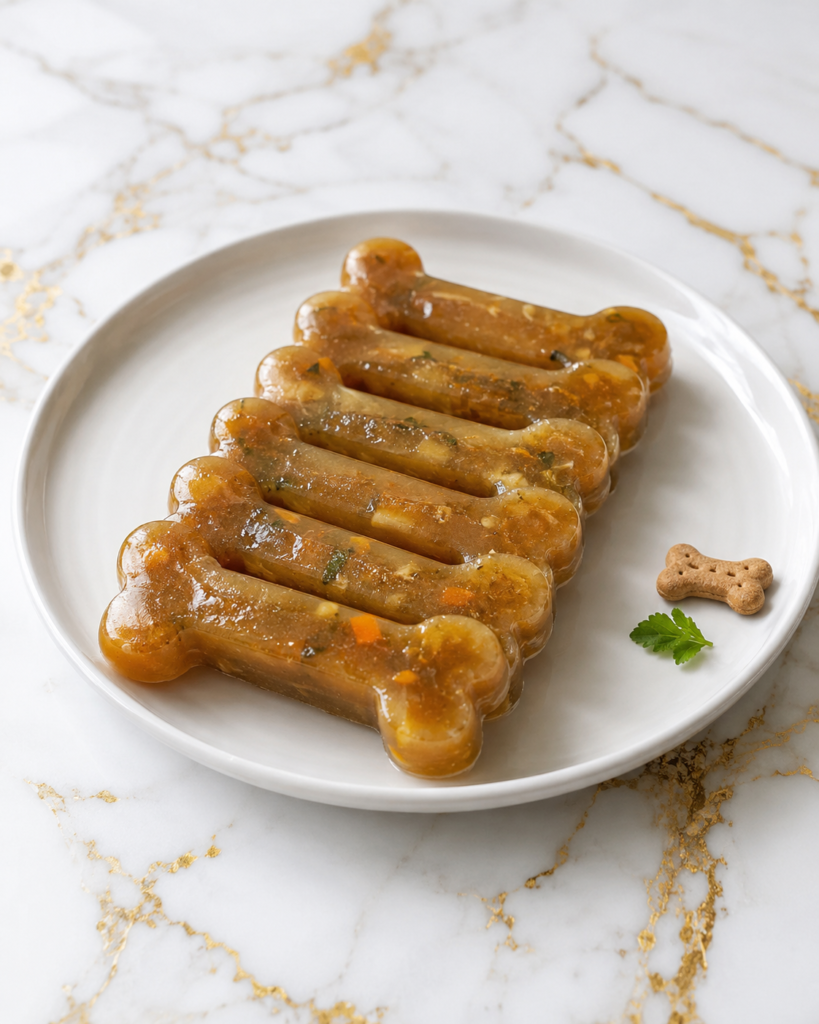
Bone Broth Frozen Dog Treats are made with a short list of familiar ingredients. Plain low-sodium bone broth, water, carrot, and parsley create a light frozen treat without complicated preparation.
The texture is firm and icy, which makes it different from baked biscuits or soft cookies. From a dog’s perspective, the cold surface can be interesting to lick, push around, and slowly nibble.
The bone broth adds a savory aroma that many dogs notice right away. Using a plain low-sodium version keeps the flavor gentle and avoids making the cubes too rich or salty.
Small pieces of carrot add a little texture and color inside each cube. The carrot should be finely chopped so it freezes evenly and stays easy to manage when served.
Fresh parsley adds mild flavor and a small amount of color. It should be chopped finely so it spreads evenly through the liquid without creating large pieces.
This recipe is approachable because there is no baking, rolling, blending, or dough shaping. A measuring cup, spoon, knife, and ice cube tray are enough to prepare a full batch.
Ingredients
- 1 cup plain low-sodium bone broth
- 1/2 cup water
- 2 tablespoons finely chopped carrot
- 1 tablespoon finely chopped fresh parsley
Tools You’ll Need
- Cutting board
- Small knife
- Measuring cups
- Measuring spoons
- Mixing bowl or liquid measuring cup
- Spoon
- Ice cube tray
- Baking sheet for stabilizing tray
- Freezer-safe container
- Parchment paper, if layering cubes
- Airtight lid or freezer-safe bag
Pro Tips
Use plain low-sodium bone broth with a simple ingredient list. Avoid broth that contains onion, garlic, heavy seasoning, added salt, or unsafe flavorings.
Check homemade bone broth carefully before using it. It should be strained well and should not contain cooked bones, bone fragments, onion, garlic, or rich fatty pieces.
Chop the carrot very finely before adding it to the tray. Small pieces freeze more evenly and are easier for dogs to manage than larger frozen chunks.
Stir the mixture right before filling the ice cube tray. Carrot and parsley can settle quickly, so a final stir helps each cube get a small amount of texture.
Keep the portions small, especially if your dog is new to frozen treats. Standard ice cube trays can make large cubes, so fill each section only halfway for smaller dogs.
Supervise your dog while serving frozen cubes. Some dogs lick slowly, while others may try to bite hard ice, so watching helps you adjust the serving size and method.
How Long This Recipe Takes
Preparation takes about 10 minutes. This includes chopping the carrot and parsley, measuring the bone broth and water, mixing everything together, and filling the ice cube tray.
Freezing usually takes about 3 to 4 hours. Smaller cubes may freeze more quickly, while deeper trays may need extra time to become solid all the way through.
The full recipe takes about 4 hours from start to finish, with most of that time being hands-off. The active work is brief, which makes this recipe easy to prepare during a quiet kitchen moment.
The pacing is flexible and beginner-friendly. Once the tray is in the freezer, the only remaining step is waiting until the cubes are completely firm.
Make-Ahead Tips
Bone Broth Frozen Dog Treats are a convenient make-ahead recipe because they are stored directly in the freezer. You can prepare a tray in advance and keep the cubes ready for occasional warm-day serving.
For neat storage, freeze the treats fully in the tray first. Once solid, remove the cubes and transfer them to a freezer-safe bag or container.
Portioning is easiest when you fill the tray based on your dog’s size. For small dogs, fill each cube space halfway or use a mini ice cube tray.
If making a larger batch, divide the cubes into smaller freezer containers. This reduces how often the full batch is exposed to freezer air each time you serve one.
Thawing is usually not necessary, but you can let a cube sit briefly in the refrigerator if your dog prefers a slightly softer texture. Avoid leaving broth-based frozen treats at warm room temperature for long periods.
Check the cubes before serving if they have been stored for several weeks. They should smell clean and savory, without freezer burn, unusual discoloration, or odd texture.
Step-by-Step Instructions
Step 1: Prepare the Ice Cube Tray
Place the ice cube tray on a small baking sheet. This gives the tray a stable base and makes it easier to move into the freezer without spilling.
Make sure the tray is clean and dry before filling. A clean tray helps the cubes freeze neatly and release more easily.
Step 2: Prepare the Carrot
Wash and peel the carrot if needed. Place it on a cutting board and chop it into very small pieces.
The carrot pieces should be tiny enough to fit comfortably inside each cube. Finely chopped carrot also makes the frozen treat easier for dogs to manage.
Step 3: Prepare the Parsley
Place the fresh parsley on the cutting board. Remove any tough stems and chop the leaves finely.
Finely chopped parsley spreads more evenly through the broth mixture. This keeps the cubes consistent and prevents large pieces from collecting in one spot.
Step 4: Measure the Bone Broth
Pour the plain low-sodium bone broth into a mixing bowl or liquid measuring cup. Check the label before using it to make sure it is free from onion, garlic, heavy seasoning, and added salt.
The broth should be plain, strained, and simple. If using homemade bone broth, make sure there are no bones, bone fragments, or fatty pieces in the liquid.
Step 5: Add the Water
Add the water to the bone broth. Stir gently to combine the liquids.
The water lightens the broth flavor and helps keep the cubes mild. This also stretches the mixture into a practical batch without making the treats too rich.
Step 6: Add the Carrot and Parsley
Add the finely chopped carrot and parsley to the broth mixture. Stir slowly until the small pieces are evenly distributed.
Some pieces may float or settle, which is normal. Stir again just before filling the tray so each cube gets a little of everything.
Step 7: Fill the Ice Cube Tray
Carefully spoon or pour the broth mixture into the ice cube tray. Fill each section with a small, dog-appropriate portion.
For small dogs, fill each section only halfway. Smaller frozen treats are easier to serve and help keep portions controlled.
Step 8: Settle the Mixture
Tap the tray gently on the counter to settle the liquid. This helps remove air pockets and allows the carrot and parsley to spread more evenly.
If the solid pieces gather in one area, use a small spoon to adjust them. Each cube should have only a modest amount of carrot and parsley.
Step 9: Freeze Until Solid
Carefully transfer the baking sheet with the tray into the freezer. Freeze for 3 to 4 hours, or until the cubes are completely solid.
Avoid removing the cubes too early. They should feel firm all the way through before unmolding.
Step 10: Unmold the Cubes
Once frozen solid, gently twist the tray to release the cubes. If they stick, let the bottom of the tray rest briefly against your hands to loosen them.
Work quickly so the cubes do not melt. Transfer them directly to a freezer-safe container or bag.
Step 11: Store for Later
Place the frozen cubes in an airtight freezer-safe container. If stacking them, use parchment paper between layers to help prevent sticking.
Seal the container tightly and return it to the freezer. Proper storage helps protect the cubes from freezer air and keeps them ready for occasional serving.
Step 12: Serve Thoughtfully
Remove one small cube when ready to serve. Offer it in a bowl, on a washable mat, or outdoors if you prefer easier cleanup.
Supervise your dog while they enjoy the frozen treat. Watch how they handle the icy texture and adjust future portions as needed.
Nutritional Notes for Dogs
Bone Broth Frozen Dog Treats are designed as a complementary frozen treat for occasional serving. They are not meant to replace complete meals, but they can add a simple savory option to your dog’s routine.
Plain low-sodium bone broth gives these cubes their main flavor and aroma. It should be strained well and free from onion, garlic, cooked bones, bone fragments, heavy seasoning, and excess fat.
Water helps lighten the broth and keeps the frozen cubes mild. This makes the treats easier to portion and helps prevent the broth flavor from becoming too rich.
Finely chopped carrot adds a small amount of texture and natural sweetness. The pieces should be tiny so they freeze evenly and remain manageable when served.
Fresh parsley adds gentle flavor and color in a modest amount. It should be chopped finely so it blends into the broth without creating large pieces inside the cubes.
These frozen treats fit best into a balanced feeding routine when served in moderation. They should be considered small extras alongside regular meals and any other treats your dog receives during the day.
Because these cubes are frozen and firm, the serving experience is different from a soft treat. Portion size, supervision, and your dog’s chewing habits all matter when deciding how to offer them.
Ingredient Swaps and Variations
- Dairy-free: This recipe is naturally dairy-free when made with plain low-sodium bone broth, water, carrot, and parsley.
- Grain-free: This recipe is naturally grain-free when made with the listed ingredients.
- Flavor variation: Replace the bone broth with plain low-sodium chicken broth or turkey broth, as long as it contains no onion, garlic, heavy seasoning, or added salt.
- Texture adjustment: Strain out the carrot and parsley before freezing for smoother cubes, or keep them finely chopped for a little added texture.
- Mini version: Use a mini ice cube tray or fill standard tray sections halfway for small dogs, training rewards, or easier portion control.
How to Serve Safely
Serve Bone Broth Frozen Dog Treats in portions that match your dog’s size, age, and normal eating habits. A small dog may only need half of a small cube, while a larger dog may be able to enjoy one modest cube.
For dogs that tend to bite hard frozen treats, place the cube in a bowl or on a washable mat. This gives your dog space to lick, nudge, and slowly work at the treat instead of trying to swallow it quickly.
Medium dogs can usually manage a small cube if the carrot pieces are finely chopped. Start with a smaller portion the first time so you can observe how your dog handles the icy texture.
Large dogs may be able to enjoy a full cube, depending on the size of the tray. Even for larger dogs, frozen treats should remain occasional extras rather than frequent large servings.
Supervise your dog whenever you serve an ice-based treat. Some dogs lick patiently, while others try to crunch frozen pieces, so watching helps you adjust future serving size and presentation.
These cubes are suitable for warm afternoons, calm after-walk routines, outdoor rest breaks, or quiet enrichment moments. Serve them in moderation and consider them alongside your dog’s regular food and other daily treats.
Common Mistakes to Avoid
Using broth with onion or garlic is the most important mistake to avoid. Always read the broth label carefully and choose a plain low-sodium option with a simple ingredient list.
Using homemade bone broth without straining it can leave small solids or bone fragments behind. Strain the broth thoroughly and discard any cooked bones, fatty pieces, or loose fragments before freezing.
Using broth that is too salty or heavily seasoned can make the treats less appropriate for dogs. Choose low-sodium broth and avoid spicy blends, herb-heavy blends, or broth made with rich sauces.
Chopping the carrot too large can create hard frozen pieces inside the cube. Keep the carrot very finely chopped so it freezes evenly and is easier for your dog to manage.
Skipping the final stir before filling the tray can make the cubes uneven. Carrot and parsley can settle quickly, so stir again right before pouring or spooning the mixture into the tray.
Making the cubes too large can make serving less comfortable. Use a mini tray or fill standard tray sections only halfway if your dog is small or new to frozen treats.
Removing the cubes before they are fully frozen can make them break apart during storage. Freeze until solid all the way through before unmolding them.
Storage and Freshness Tips
Bone Broth Frozen Dog Treats should be stored in the freezer. They are not suitable for room-temperature storage because they melt quickly once removed.
After the cubes are fully frozen, transfer them from the ice cube tray to an airtight freezer-safe container. This helps protect them from freezer air and keeps the tray available for future batches.
If stacking the cubes, place parchment paper between layers. This can help prevent sticking, especially if the cubes soften slightly during transfer.
These treats are best used within about 1 to 2 months. Labeling the container with the date makes it easier to rotate batches and use older cubes first.
Refrigeration is only useful for briefly softening one cube before serving. Do not store the cubes in the refrigerator long-term because they will melt back into liquid.
Check the cubes before serving if they have been stored for several weeks. Discard them if you notice freezer burn, odd odors, unusual discoloration, excess ice crystals with off smells, or changes in texture.
Keep the freezer container sealed tightly between servings. Limiting air exposure helps maintain a cleaner flavor and better frozen consistency.
If a cube melts during serving, discard the leftover liquid rather than refreezing it. Refreezing a partially served treat can affect freshness and is not a good storage practice.
FAQs
Can I use homemade bone broth?
Yes, homemade bone broth can be used if it is plain, strained, and low in sodium. Make sure it contains no onion, garlic, cooked bones, bone fragments, heavy seasoning, or excess fat.
Can I use store-bought bone broth?
Yes, store-bought bone broth can work well if the label is simple and dog-appropriate. Choose low-sodium broth with no onion, garlic, spicy seasoning, added salt, or flavored additives.
Can I make these without carrot?
Yes, you can leave out the carrot for a smoother cube. The bone broth, water, and parsley mixture will still freeze well and be easier for some dogs to lick.
Can I leave out the parsley?
Yes, the parsley can be omitted if you prefer a plainer treat. The cubes will still have a savory bone broth flavor and freeze the same way.
Should I thaw the cubes before serving?
Most dogs can enjoy a small cube straight from the freezer under supervision. If your dog prefers a softer texture, let one sit briefly in the refrigerator before serving.
Can puppies have these treats?
Puppies may be able to have a tiny amount if they already tolerate the ingredients. Keep portions very small, use simple broth, and supervise closely during serving.
How long do these treats last?
These cubes are best used within 1 to 2 months when stored in an airtight freezer-safe container. Check for freezer burn, unusual odors, or texture changes before offering one to your dog.
A Cool Savory Cube for Gentle Treat Moments
Bone Broth Frozen Dog Treats are a simple way to prepare a refreshing homemade snack with plain broth, careful portioning, and very little active work. When frozen fully, stored safely, and served with supervision, they can fit naturally into warm days, calm reward moments, and occasional treat routines alongside your dog’s regular balanced meals.