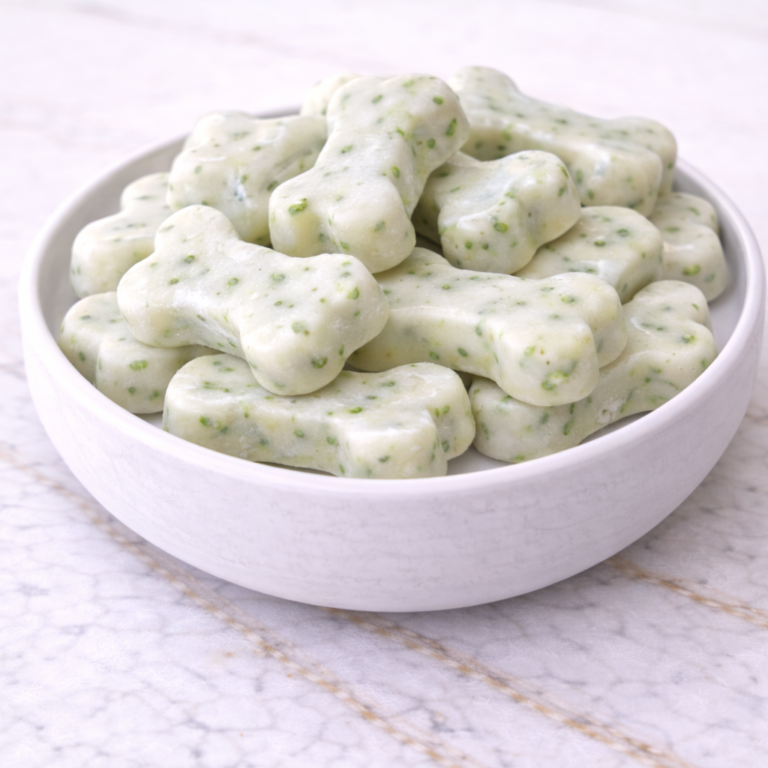

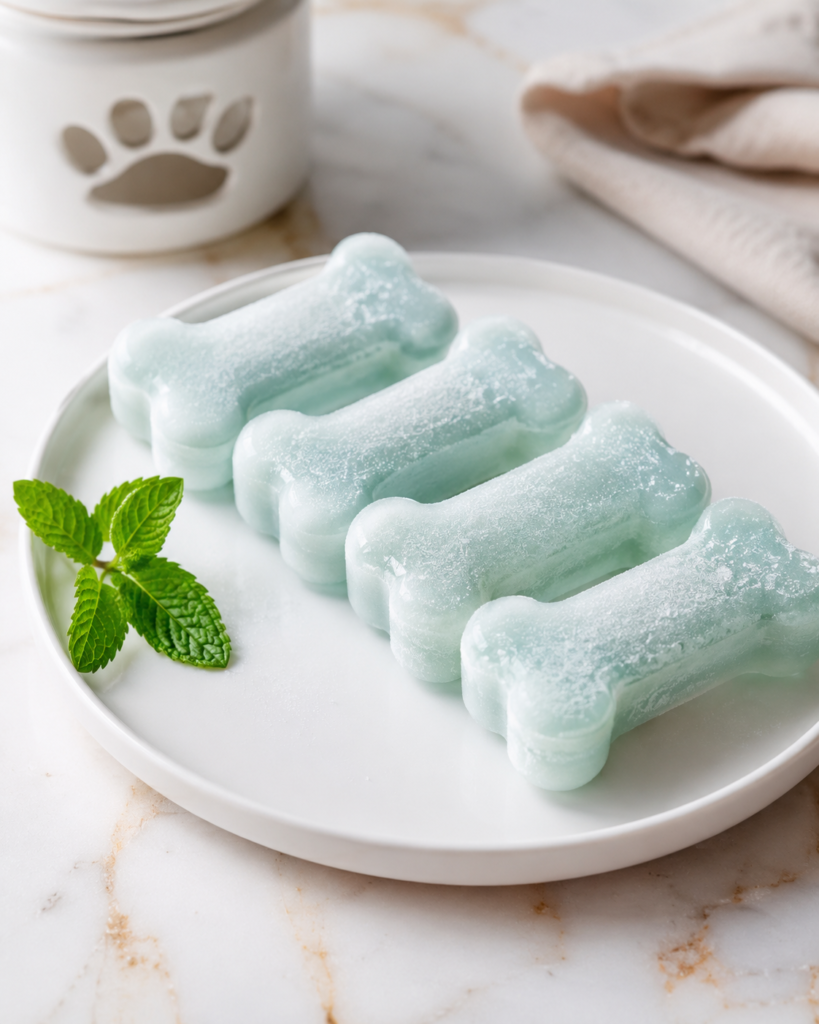
I enjoy making Cooling Frozen Dog Treats because they are simple, refreshing, and easy to prepare without baking. They feel especially useful during warm days when a small chilled treat can fit naturally into a calm routine.
This recipe feels thoughtful because it uses familiar ingredients in small, manageable portions. Plain yogurt, cucumber, banana, and a little water blend into a smooth mixture that freezes into gentle dog-friendly bites.
These frozen treats fit well into everyday dog care when served occasionally and in moderation. They can be offered after a walk, during a quiet rest period, or as a small cool snack when your dog has been active.
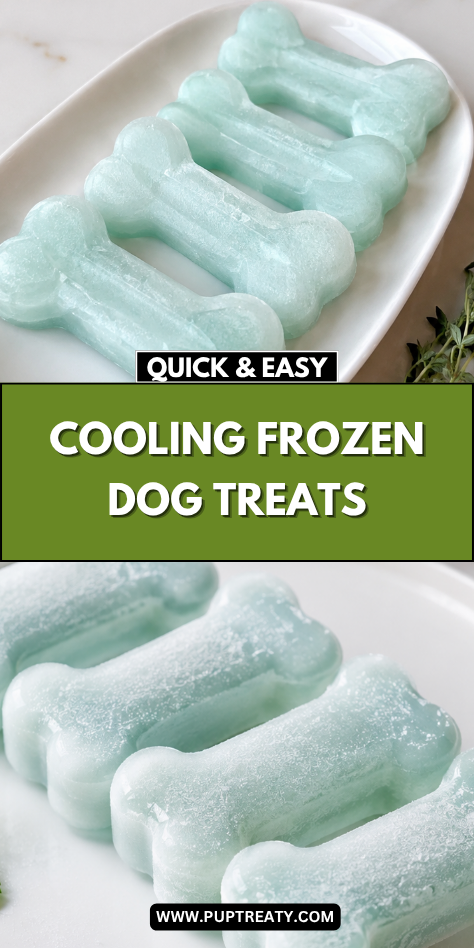
I also like that frozen treats can encourage a slower treat moment. Many dogs lick and nibble the cold texture, which can make the experience feel calm and engaging.
Homemade treats like these are meant to complement your dog’s regular balanced meals. They are not a full diet replacement, but they can add variety to occasional treat routines when your dog tolerates the ingredients well.
Why This Recipe Is Great for Your Dog
Cooling Frozen Dog Treats are made with simple, dog-appropriate ingredients. Plain unsweetened yogurt, peeled cucumber, banana, and water create a light frozen treat without added sugar or unnecessary flavorings.
The texture is smooth before freezing and firm once set. From a dog’s perspective, the cold surface can be interesting to lick, nudge, and nibble slowly.
The cucumber adds a fresh, mild flavor and helps keep the mixture light. Peeling and chopping it before blending gives the treats a smoother texture.
The banana adds gentle natural sweetness and helps the frozen treats feel less icy. It also blends easily with yogurt and cucumber for a creamy base.
This recipe is approachable for home cooks because there is no dough, oven, or complicated shaping. A blender, spoon, and silicone molds are enough to prepare a full batch.
Dogs often enjoy frozen treats because they feel different from everyday biscuits. Since these treats are portioned in molds, they are easy to size based on your dog’s needs.
Ingredients
- 1 cup plain unsweetened yogurt
- 1/2 cup peeled chopped cucumber
- 1/2 ripe banana, mashed
- 1 tablespoon water, if needed
Tools You’ll Need
- Cutting board
- Vegetable peeler
- Small knife
- Mixing bowl
- Measuring cups
- Measuring spoon
- Fork or potato masher
- Whisk or silicone spatula
- Blender or food processor
- Silicone molds or ice cube tray
- Small spoon
- Baking sheet for stabilizing molds
- Freezer-safe container
- Parchment paper, if layering treats
- Airtight lid or freezer-safe bag
Pro Tips
Use plain unsweetened yogurt with no added sugar or artificial sweeteners. Avoid flavored yogurts, especially varieties with xylitol, chocolate, or sweetened fruit blends.
Peel the cucumber before blending for the smoothest texture. If your dog does well with cucumber skin, you can leave a little on, but peeling keeps the mixture gentler and easier to blend.
Mash the banana before adding it to the blender. A ripe banana with a few brown spots will blend smoothly and add a mild sweetness.
Keep the portions small, especially when serving frozen treats for the first time. Small silicone molds or partially filled ice cube trays make it easier to match the treat size to your dog.
Place flexible molds on a baking sheet before filling them. This keeps the molds stable and helps prevent spills when moving them into the freezer.
Freeze the treats until they are fully solid before removing them from the molds. Partly frozen treats can break apart, smear, or become difficult to store neatly.
How Long This Recipe Takes
Preparation takes about 10 to 15 minutes. This includes peeling and chopping the cucumber, mashing the banana, blending the mixture, and filling the molds.
Freezing usually takes about 3 to 4 hours. Smaller molds may freeze closer to 3 hours, while deeper ice cube trays may need longer to become firm all the way through.
The full recipe takes about 4 hours from start to finish, with most of that time being hands-off. The active work is brief, so the recipe is easy to prepare during a quiet part of the day.
The overall pacing is flexible and simple. Once the molds are filled and placed in the freezer, the only remaining step is waiting until the treats are fully set.
Make-Ahead Tips
Cooling Frozen Dog Treats are a convenient make-ahead option because they are stored directly in the freezer. You can prepare a batch in advance and keep the treats ready for occasional warm-day serving.
For the neatest storage, freeze the treats fully in the molds first. Once solid, remove them and transfer them to a freezer-safe container or bag.
Portioning is easiest when you choose molds based on your dog’s size. For small dogs, use tiny silicone molds or fill larger molds only halfway.
If making a larger batch, divide the frozen treats into smaller freezer containers. This reduces how often the full batch is exposed to freezer air each time you serve one.
Thawing is usually not necessary, but you can let one treat sit briefly in the refrigerator if your dog prefers a slightly softer texture. Avoid leaving yogurt-based frozen treats at warm room temperature for long periods.
Check the treats before serving if they have been stored for several weeks. They should smell clean and fresh, with no freezer burn, unusual discoloration, or odd texture.
Step-by-Step Instructions
Step 1: Prepare the Molds
Place silicone molds or an ice cube tray on a small baking sheet. This gives the molds a stable base and makes them easier to move into the freezer.
Make sure the molds are clean and dry before filling. Dry molds help the treats release more cleanly once frozen.
Step 2: Prepare the Cucumber
Wash the cucumber well, then peel it with a vegetable peeler. Place it on a cutting board and chop it into small pieces.
Small cucumber pieces blend more easily into the yogurt mixture. This helps create a smoother frozen treat without large icy chunks.
Step 3: Mash the Banana
Peel the ripe banana and place half of it in a mixing bowl. Mash it with a fork or potato masher until mostly smooth.
A few tiny banana pieces are fine, but large chunks can freeze unevenly. A smoother banana base helps the treats become creamier.
Step 4: Add the Yogurt
Add the plain unsweetened yogurt to the mashed banana. Stir slowly until the banana and yogurt are evenly combined.
The mixture should look creamy and pale. Scrape the sides of the bowl so the banana blends fully into the yogurt.
Step 5: Add the Cucumber
Add the chopped cucumber to the yogurt and banana mixture. Stir gently so the cucumber is lightly coated.
The mixture will look textured at this stage. Blending will help the cucumber break down and spread evenly through the treats.
Step 6: Blend the Mixture
Transfer the mixture to a blender or food processor. Blend until the cucumber is broken down and the mixture looks mostly smooth.
If the mixture is too thick to blend easily, add 1 tablespoon of water. Blend again until the texture is creamy but not watery.
Step 7: Fill the Molds
Spoon the blended mixture into the silicone molds or ice cube tray. Fill each cavity with a small, dog-appropriate portion.
Tap the baking sheet gently on the counter to settle the mixture. This helps remove air pockets and creates neater frozen treats.
Step 8: Freeze Until Solid
Carefully transfer the baking sheet with the filled molds into the freezer. Freeze for 3 to 4 hours, or until the treats are completely firm.
Avoid removing the treats too early. They should feel solid all the way through before unmolding.
Step 9: Unmold the Treats
Once frozen solid, gently release the treats from the molds. If they stick, let the outside of the mold rest briefly against your hands to loosen them.
Work quickly so the treats do not soften too much. Place them directly into a freezer-safe container or bag.
Step 10: Store for Later
Transfer the frozen treats to an airtight freezer-safe container. If stacking them, place parchment paper between layers to help prevent sticking.
Seal the container tightly and return it to the freezer. Proper storage helps protect the treats from freezer air and keeps them ready for occasional serving.
Step 11: Serve Thoughtfully
Remove one small frozen treat when ready to serve. Offer it in a bowl, on a washable mat, or outdoors if you prefer easier cleanup.
Supervise your dog while they enjoy the frozen treat. Watch how they handle the cold texture and adjust future portions as needed.
Nutritional Notes for Dogs
Cooling Frozen Dog Treats are designed as a complementary homemade treat for occasional serving. They are not meant to replace complete meals, but they can add a cool and simple option to your dog’s warm-weather routine.
Plain unsweetened yogurt creates the creamy base of these frozen treats. Since some dogs are sensitive to dairy, it is best to start with a small portion and observe how your dog handles it.
Cucumber adds a light texture and mild flavor to the mixture. Peeling and chopping it before blending helps the treats freeze with a smoother consistency.
Banana adds natural sweetness and helps balance the fresh cucumber flavor. It also makes the frozen texture a little creamier than a treat made with water alone.
Water is included only if the mixture needs help blending. Too much water can make the treats icier, so it should be added slowly and only when needed.
These frozen treats fit best into a balanced feeding routine when served thoughtfully. Keeping portions small helps them remain occasional extras alongside your dog’s regular food and any other treats served that day.
Ingredient Swaps and Variations
- Dairy-free: Replace the yogurt with plain unsweetened coconut yogurt, checking the label carefully for added sweeteners or unsafe ingredients.
- Grain-free: This recipe is naturally grain-free when made with plain unsweetened yogurt, cucumber, banana, and water.
- Flavor variation: Replace 2 tablespoons of cucumber with plain pumpkin puree for a slightly thicker frozen treat.
- Texture adjustment: Blend the mixture fully for a smooth treat, or pulse briefly to leave a little cucumber texture.
- Mini version: Use tiny silicone molds or fill larger molds only halfway for small dogs, training rewards, or easier portion control.
How to Serve Safely
Serve Cooling Frozen Dog Treats in portions that match your dog’s size and usual eating habits. A small dog may only need half of a small cube, while a larger dog may be able to enjoy one modest frozen treat.
For dogs that tend to bite frozen treats quickly, serve the treat in a bowl or on a washable mat. This gives your dog space to lick and nibble at the cold texture more slowly.
Medium dogs can usually enjoy a small frozen treat if they tolerate the ingredients well. Start with a smaller amount the first time so you can observe how your dog responds to the yogurt, cucumber, banana, and frozen texture.
Large dogs may be able to enjoy a full treat depending on the mold size. Even for larger dogs, frozen treats should remain occasional extras rather than frequent large servings.
Supervise your dog whenever serving a frozen treat. Some dogs lick patiently, while others try to crunch frozen pieces, so watching helps you adjust the size and serving method.
These treats are suitable for warm afternoons, calm after-walk routines, or quiet enrichment moments. Serve them in moderation and consider them alongside your dog’s regular meals and other daily treats.
Common Mistakes to Avoid
Using flavored yogurt is a common mistake with frozen dog treats. Choose plain unsweetened yogurt and avoid added sugar, artificial sweeteners, chocolate, or sweetened fruit blends.
Skipping the cucumber prep can affect the texture. Wash the cucumber well, peel it if desired, and chop it small so it blends smoothly into the mixture.
Making the treats too large can make serving harder to manage. Use small molds or fill larger molds only halfway so the frozen portion matches your dog’s size.
Adding too much water can make the finished treats icy instead of creamy. Add only 1 tablespoon if needed, and stop once the mixture blends smoothly.
Leaving large banana chunks in the mixture can create uneven freezing. Mash or blend the banana well so the finished treats have a consistent texture.
Removing the treats from the freezer too early can make them messy and difficult to store. Freeze until completely solid before unmolding or transferring them to a container.
Leaving frozen treats out too long can affect freshness and texture. Serve one at a time and return the remaining treats to the freezer promptly.
Storage and Freshness Tips
Cooling Frozen Dog Treats should be stored in the freezer. They are not suitable for room-temperature storage because they soften and melt quickly once removed.
After the treats are fully frozen, transfer them from the molds to an airtight freezer-safe container. This helps protect them from freezer air and keeps them easier to portion.
If stacking the treats, place parchment paper between layers. This can help prevent sticking, especially if the treats soften slightly during transfer.
These treats are best used within about 1 to 2 months. Labeling the container with the date makes it easier to rotate batches and use older treats first.
Refrigeration is only useful for briefly softening one treat before serving. Do not store them in the refrigerator long-term because they will melt back into a soft yogurt mixture.
Check the treats before serving if they have been stored for several weeks. Discard them if you notice freezer burn, odd odors, unusual discoloration, excess ice crystals with off smells, or changes in texture.
Keep the freezer container sealed tightly between servings. Limiting air exposure helps maintain a cleaner flavor and better frozen consistency.
If a treat melts during serving, discard the leftover mixture rather than refreezing it. Refreezing a partially served treat can affect freshness and is not a good storage practice.
FAQs
Can I use Greek yogurt?
Yes, plain unsweetened Greek yogurt can be used if your dog tolerates dairy. It is thicker than regular yogurt, so you may need a small splash of water to help it blend smoothly.
Can I make these treats without banana?
Yes, you can leave out the banana if needed. The treats may be less sweet and slightly icier, but the yogurt and cucumber will still freeze well.
Do I need to peel the cucumber?
Peeling is optional if the cucumber is washed well and your dog tolerates the skin. Peeling creates a smoother texture and may be easier for blending.
Can I use coconut yogurt instead?
Yes, plain unsweetened coconut yogurt can replace regular yogurt. Check the label carefully for added sweeteners, xylitol, chocolate, or unsafe flavorings.
Should I thaw these before serving?
Most dogs can enjoy a small frozen treat straight from the freezer under supervision. If your dog prefers a softer texture, let one sit briefly in the refrigerator before serving.
Can puppies have these frozen treats?
Puppies may be able to have a tiny amount if they already tolerate the ingredients. Keep servings very small and introduce new treats gradually.
How long do these treats last?
They are best used within 1 to 2 months when stored in an airtight freezer-safe container. Check for freezer burn, unusual odors, or texture changes before serving.
A Cool Little Treat for Warm, Quiet Moments
Cooling Frozen Dog Treats are a simple way to prepare a refreshing homemade snack with plain yogurt, cucumber, banana, and careful portioning. When frozen fully, stored safely, and served in moderation, they can fit naturally into warm days, calm reward moments, and occasional treat routines alongside your dog’s regular balanced meals.