
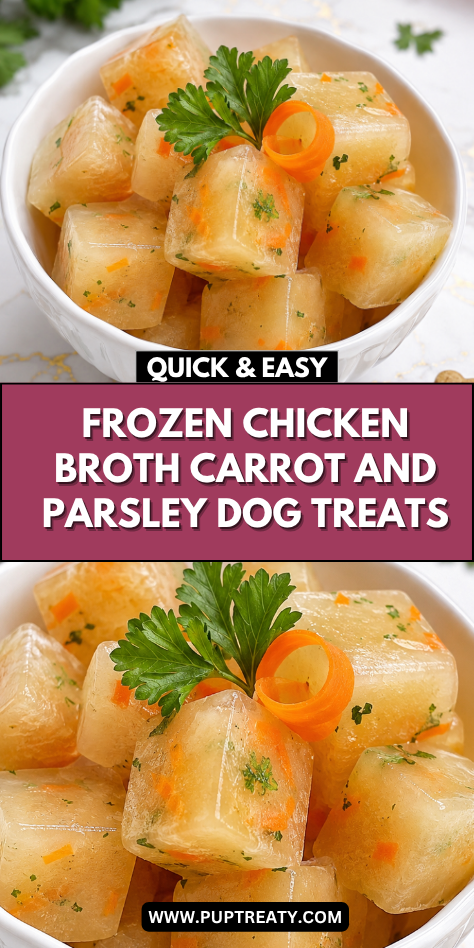
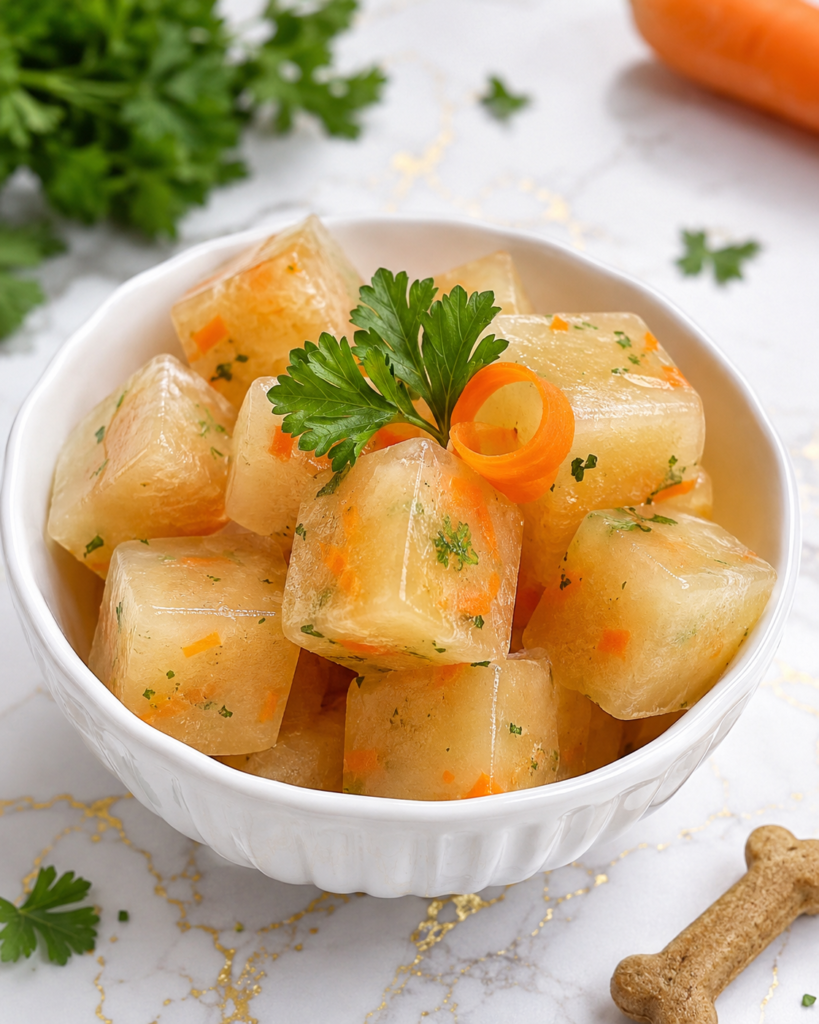
I enjoy making frozen chicken broth, carrot, and parsley dog treats because they are simple, practical, and easy to keep ready in the freezer. They feel especially useful when I want a small homemade treat that is savory instead of sweet.
This recipe feels thoughtful because it uses familiar ingredients in a cool, portioned form. Plain chicken broth gives the treats a gentle flavor, carrot adds color and texture, and parsley brings a fresh little finish.
I like recipes like this for everyday dog care because they can be prepared ahead and served in small amounts. A frozen broth treat can fit naturally after outdoor time, during a quiet afternoon, or as an occasional reward.
There is something calm about chopping a carrot, stirring a simple mixture, and filling small molds while your dog waits nearby. Even a no-bake recipe can become a small routine that feels caring and steady.
These treats are meant to be a homemade complementary snack, not a complete diet replacement. They should be served in moderation and sized carefully for your dog’s age, size, chewing habits, and normal feeding routine.
Why This Recipe Is Great for Your Dog
This recipe uses simple, dog-appropriate ingredients that are easy to recognize. Plain chicken broth, carrot, parsley, and water create a short ingredient list that stays practical for home preparation.
The ingredients are familiar and easy to handle when selected carefully. The broth should be plain and free from onion, garlic, added salt, heavy seasoning, or unsafe ingredients.
The frozen texture gives dogs a different experience from baked treats. Some dogs enjoy licking a frozen cube slowly, while others do better with smaller pieces that soften quickly in a bowl.
Carrot adds a little texture and mild sweetness to the savory broth base. When grated or finely chopped, it distributes easily through the molds and freezes into small, manageable bits.
For home cooks, this recipe is very approachable. There is no dough to roll, no oven to heat, and no complicated technique beyond mixing, filling, and freezing.
Dogs often enjoy the aroma of chicken broth, especially when it is served in a cool treat format. The parsley is used in a small amount, keeping the flavor fresh but not overpowering.
Ingredients
- 1 1/2 cups plain dog-safe chicken broth
- 1/2 cup finely grated carrot
- 1 tablespoon finely chopped fresh parsley
- 1/4 cup water
Tools You’ll Need
- Cutting board
- Sharp knife
- Box grater
- Measuring cups
- Measuring spoons
- Mixing bowl
- Spoon or silicone spatula
- Silicone molds or ice cube tray
- Baking sheet
- Fine mesh strainer
- Freezer-safe bag or container
- Airtight storage container
Pro Tips
Choose plain chicken broth made without onion, garlic, added salt, or heavy seasoning. If using store-bought broth, read the label carefully before adding it to the recipe.
Grate the carrot finely so the pieces freeze evenly throughout the treats. Larger chunks can become too firm and may be harder for some dogs to manage.
Chop the parsley very finely and keep the amount modest. A little parsley blends well with the broth without making the flavor too strong.
Place silicone molds on a baking sheet before filling them. This gives the molds a flat, stable base and helps prevent spills on the way to the freezer.
Keep the portions small, especially if your dog is new to frozen broth treats. Smaller frozen pieces soften faster and are easier to serve safely.
Let a treat sit in your dog’s bowl for a minute if it feels very hard straight from the freezer. This helps soften the surface slightly and can make the texture more comfortable.
How Long This Recipe Takes
Preparation usually takes about 10 to 15 minutes. Most of that time is spent grating the carrot, chopping the parsley, measuring the broth, and filling the molds.
Freezing usually takes about 3 to 4 hours, depending on the size and depth of the molds. Small silicone molds may freeze sooner, while larger cubes may need more time to become firm all the way through.
The full recipe takes about 4 hours from start to finish, but most of that time is hands-off. Once the molds are filled and placed in the freezer, the treats set without needing attention.
The pacing is calm and flexible. You can prepare the mixture early in the day and have small savory frozen treats ready later for occasional serving.
Make-Ahead Tips
This recipe is well suited for make-ahead preparation because it is designed for freezer storage. You can prepare a batch once and keep the treats ready for warm days, quiet snack moments, or simple enrichment.
Use small silicone molds or an ice cube tray to create manageable portions. Once the treats are fully frozen, transfer them to a freezer-safe bag or container so the molds can be reused.
Label the container with the recipe name and date. This helps you rotate older treats first and keeps your freezer routine organized.
Remove only the number of treats you plan to serve. Keeping the rest frozen helps preserve their texture and prevents repeated thawing.
Thawing is not usually needed for small treats, but very firm pieces can rest briefly in a bowl before serving. Avoid leaving broth-based frozen treats at room temperature for long periods.
Step-by-Step Instructions
Step 1: Prepare the Carrot
Wash the carrot well and peel it if preferred. Use a box grater to finely grate enough carrot to measure 1/2 cup.
Keep the carrot pieces small and even. Fine pieces freeze more comfortably into the broth and make the treats easier to portion.
Step 2: Chop the Parsley
Rinse the fresh parsley under cool water and pat it dry. Finely chop enough parsley to measure 1 tablespoon.
Use only a modest amount so the flavor stays mild. The parsley should be spread through the mixture without taking over the broth.
Step 3: Check the Chicken Broth
Measure 1 1/2 cups of plain dog-safe chicken broth. Check that it is free from onion, garlic, added salt, heavy seasoning, and unsafe ingredients.
If the broth has any bits or sediment, pour it through a fine mesh strainer. This helps keep the frozen treats smooth and easy to serve.
Step 4: Combine the Broth and Water
Pour the chicken broth into a mixing bowl. Add 1/4 cup of water and stir gently to combine.
The water helps lighten the mixture slightly while keeping the chicken flavor present. Stir slowly so the liquid is evenly blended.
Step 5: Add the Carrot
Add the finely grated carrot to the bowl with the broth mixture. Stir until the carrot is evenly distributed.
The carrot may settle as the mixture sits, so stir again before filling the molds. This helps each frozen treat get a similar amount of carrot.
Step 6: Add the Parsley
Sprinkle the finely chopped parsley into the bowl. Stir gently until the small green pieces are spread throughout the liquid.
Check the mixture for any large parsley stems. Remove them before freezing so the treats stay smooth and easy to lick or chew.
Step 7: Prepare the Molds
Place silicone molds or an ice cube tray on a baking sheet. This creates a stable surface for filling and carrying the molds to the freezer.
Make sure the molds are clean and dry before using them. Dry molds help the frozen treats release more neatly once they are solid.
Step 8: Fill the Molds
Carefully spoon or pour the broth mixture into the molds. Fill each cavity nearly to the top, leaving a little space for expansion as the treats freeze.
Stir the mixture occasionally as you fill. This keeps the carrot and parsley from settling at the bottom of the bowl.
Step 9: Freeze Until Solid
Transfer the baking sheet with the filled molds to the freezer. Keep the tray flat so the treats freeze evenly.
Freeze for 3 to 4 hours, or until the treats are completely solid. Deeper molds may need extra time before the centers are fully firm.
Step 10: Remove the Frozen Treats
Once frozen, gently press the treats out of the silicone molds. If using an ice cube tray, twist the tray carefully to loosen the cubes.
Work quickly so the treats do not begin to melt. Place the frozen pieces directly into a freezer-safe bag or container.
Step 11: Label and Store
Seal the freezer-safe bag or container tightly. Label it with the recipe name and date before returning it to the freezer.
Keep the treats frozen until serving time. Remove only what you need so the remaining treats stay firm, fresh, and ready for occasional use.
Nutritional Notes for Dogs
Frozen Chicken Broth Carrot and Parsley Dog Treats are made with a short list of simple, savory ingredients. Plain chicken broth creates the base, while carrot and parsley add small amounts of texture, color, and fresh flavor.
The chicken broth should be plain and dog-safe, with no onion, garlic, added salt, heavy seasoning, or rich sauces. This keeps the recipe focused on a mild broth flavor that is easy to portion into small frozen treats.
Carrot adds gentle sweetness and a little texture when finely grated. Small pieces are best because they freeze evenly and soften more quickly once the treat sits in the bowl.
Parsley is used in a modest amount so the flavor stays light. Finely chopping it helps spread the fresh taste throughout the broth without creating large leafy pieces.
These treats are best served as a complementary homemade snack. They are not meant to replace balanced meals, and they should fit into your dog’s regular feeding routine in small amounts.
Moderation is still important, even with a simple broth-based treat. Frozen snacks can be refreshing, but they should remain occasional and should not take the place of regular food or fresh water.
Ingredient Swaps and Variations
Dairy-free: This recipe is naturally dairy-free as written because it does not include milk, yogurt, cheese, or butter. Keep it dairy-free by avoiding creamy add-ins.
Grain-free: This recipe is naturally grain-free as written. Keep it grain-free by avoiding oats, rice, biscuit crumbs, or grain-based mix-ins.
Flavor variation: Use plain dog-safe turkey broth instead of chicken broth. Make sure it is free from onion, garlic, added salt, heavy seasoning, and unsafe ingredients.
Texture adjustment: Use finely grated carrot for a little texture or blend the carrot into the broth for a smoother frozen treat. Smaller molds will soften faster and may be easier for many dogs to manage.
Mini version: Freeze the mixture in tiny silicone molds or shallow ice cube trays. Mini treats are helpful for small dogs, quick cooling snacks, or dogs new to frozen treats.
How to Serve Safely
Serve these treats in portions that match your dog’s size, chewing style, and regular feeding routine. A small dog may only need one tiny frozen piece, while a larger dog may be able to enjoy a slightly bigger treat.
Offer a small amount the first time your dog tries this recipe. This gives you time to observe how your dog handles the cold texture and the savory broth flavor.
Supervise your dog while eating frozen treats. Some dogs lick slowly, while others may try to bite down on a frozen cube, so smaller portions are often the easiest choice.
These treats are suitable for warm afternoons, quiet enrichment, or after outdoor time. They can also be served in a bowl if you want the treat to soften slightly before your dog eats it.
Keep moderation in mind because frozen broth treats still count as snacks. They should be occasional and should not replace meals, regular treats, or access to fresh drinking water.
If a treat feels very hard straight from the freezer, let it sit in your dog’s bowl for a minute or two. This softens the surface slightly and can make the texture more comfortable.
Common Mistakes to Avoid
Using regular seasoned broth is one of the most common mistakes. Many broths made for people contain onion, garlic, added salt, or seasoning, so always check the label carefully.
Leaving carrot pieces too large can make frozen treats harder to manage. Grate the carrot finely or blend it into the broth if your dog prefers a smoother texture.
Adding too much parsley can make the flavor too strong. Use a measured amount and chop it finely so it blends evenly into the mixture.
Skipping the stir before filling molds can lead to uneven treats. Carrot and parsley can settle at the bottom of the bowl, so stir occasionally as you fill each cavity.
Making the treats too large can make them difficult for some dogs to lick or chew. Use small molds or fill larger molds only partway for easier portions.
Freezing silicone molds without support can cause spills. Place the molds on a baking sheet before filling so they stay flat and steady on the way to the freezer.
Leaving the treats out too long can affect texture and freshness. Remove only what you plan to serve and return the rest to the freezer right away.
Storage and Freshness Tips
Room-temperature storage is not appropriate for these treats because they are frozen broth cubes. They should stay in the freezer until just before serving.
Once the treats are frozen solid, remove them from the molds and place them in a freezer-safe bag or container. A tight seal helps protect the treats from freezer odors and ice buildup.
Label the container with the recipe name and date. This makes it easier to rotate older treats first and keep your freezer storage organized.
For best quality, use the treats within 1 to 2 months. They may stay frozen longer, but the texture and flavor are usually best within that window.
Store the treats in small portions so you can remove only what you need. This helps prevent repeated thawing and keeps the batch in better condition.
Check frozen treats before serving. Discard any with heavy freezer burn, an unusual smell, visible signs of repeated thawing, or a texture that seems unpleasant.
Do not refreeze fully melted treats. If a treat softens briefly in the bowl, it can be served promptly, but melted broth treats should be discarded rather than frozen again.
FAQs
Can I use store-bought chicken broth?
Yes, you can use store-bought broth if it is plain and dog-safe. Check the label carefully for onion, garlic, added salt, heavy seasoning, or unsafe ingredients.
Can I use homemade chicken broth?
Homemade broth can work well when it is made plain. Use chicken and water only, and avoid onions, garlic, salt, seasoning, bones left in the finished broth, or rich pan drippings.
Can I leave out the parsley?
Yes, you can leave out the parsley if you prefer. The treats will still have a simple savory flavor from the chicken broth and carrot.
Can I blend the carrot instead of grating it?
Yes, blending the carrot with the broth creates a smoother frozen treat. This can be helpful for dogs who prefer less texture or smaller pieces.
How long do these treats take to freeze?
Most small molds freeze in about 3 to 4 hours. Larger or deeper molds may need more time to become solid all the way through.
Are these treats meant to replace water?
No, these treats should not replace fresh water. They are an occasional frozen snack, and your dog should always have access to clean drinking water.
How many frozen treats can I give my dog?
The right amount depends on your dog’s size, activity level, and regular diet. Start with one small piece and keep frozen broth treats occasional.
A Simple Savory Freezer Treat
Frozen Chicken Broth Carrot and Parsley Dog Treats are a calm, practical way to keep a small savory snack ready for your dog. With plain broth, finely prepared vegetables, small portions, and careful freezer storage, they can become an easy homemade option for warm days and quiet everyday moments.