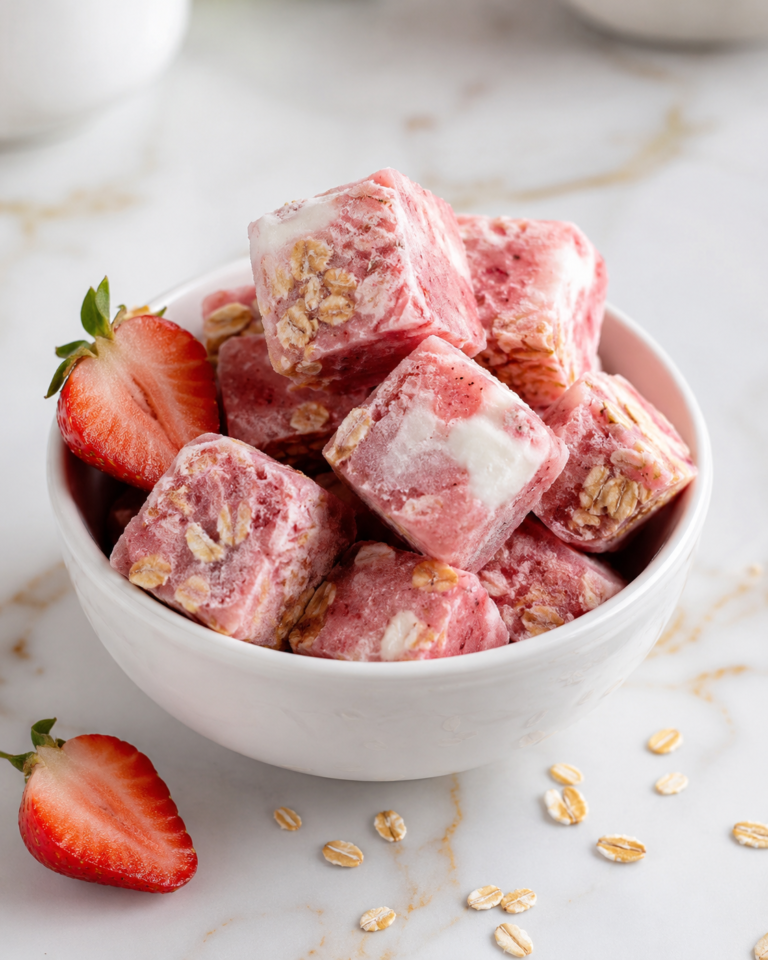

Preparing simple frozen treats at home has become one of my favorite warm-weather routines. These frozen watermelon yogurt cubes for dogs are especially helpful on sunny days when something cool feels refreshing. The process is calm, steady, and easy to repeat.
I enjoy this recipe because it uses a short list of familiar, dog-safe ingredients. Fresh watermelon blends smoothly with plain yogurt to create a light, creamy base. It feels thoughtful without becoming complicated.
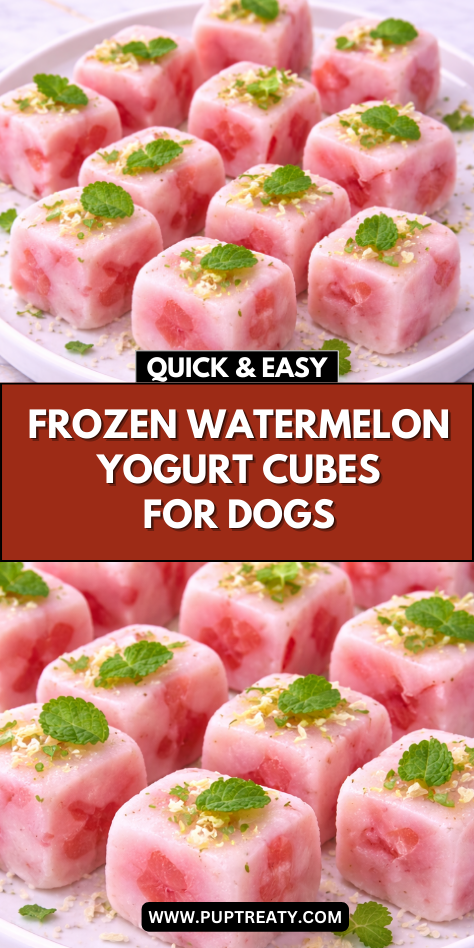
What makes these cubes feel special is their smooth, icy texture once frozen. The watermelon provides natural sweetness and hydration, while the yogurt adds gentle creaminess. Each small cube feels intentional and easy to portion.
Over time, this recipe has earned a steady place in our seasonal routine. I prepare a modest batch and freeze them in small molds, offering them occasionally alongside a complete and balanced diet. That consistent approach supports moderation and balance.
There is reassurance in choosing plain, unsweetened yogurt without artificial sweeteners. Selecting ripe, seedless watermelon keeps preparation simple and controlled. That attention to detail carries through to every finished cube.
Because these treats are stored in the freezer, they are easy to portion one at a time. Having them ready makes it simple to offer a small, measured reward. Practicality is what keeps this recipe in regular rotation.
Why This Recipe Is Great for Your Dog
The ingredient list for these frozen cubes is minimal and intentional. Watermelon and yogurt create the base without added sugars or artificial flavorings. Keeping the formula straightforward makes preparation approachable.
From a texture standpoint, these cubes are smooth and firm once frozen. Blending thoroughly ensures even distribution of ingredients. The result is easy to handle and serve.
Watermelon has a naturally appealing aroma and mild sweetness that many dogs enjoy. When paired with plain yogurt, the scent remains balanced and gentle. The flavor profile is light and steady.
Preparation is calm and methodical. There is no baking or stovetop cooking involved. The freezer does the work of setting the cubes.
Because these are designed as occasional rewards, they fit comfortably into regular feeding routines. A single small cube can be offered in moderation alongside a complete and balanced diet. That flexibility supports consistency.
The use of small molds also makes portion control straightforward. Uniform shapes help maintain predictable treat habits. Controlled portions support steady routines.
Ingredients
- 1 cup seedless watermelon, cubed
- 1/2 cup plain unsweetened yogurt
- 1 tablespoon water
Tools You’ll Need
- Blender or food processor
- Measuring cups
- Measuring spoons
- Cutting board
- Sharp knife
- Silicone mold or ice cube tray
- Spatula
- Baking sheet (to stabilize molds)
- Freezer-safe container
- Freezer space
Pro Tips
Use fully ripe, seedless watermelon for the best texture. Remove any visible seeds before blending.
Choose plain, unsweetened yogurt without artificial sweeteners. Always check labels carefully.
Blend thoroughly until completely smooth. A consistent mixture freezes more evenly.
Place molds on a baking sheet before filling. This makes transferring to the freezer easier.
Fill molds slightly below the rim to prevent overflow. Even portions support consistent freezing.
Allow the cubes to freeze completely before removing from molds. Proper freezing helps them hold their shape.
How Long This Recipe Takes
Preparation typically takes about 10–15 minutes. This includes cutting the watermelon and blending the ingredients.
Freezing time averages 3–4 hours. The mixture needs sufficient time to firm fully.
In total, the entire process takes about 4 hours. Most of that time is hands-off while the cubes freeze.
The pace is relaxed and uncomplicated. Planning ahead ensures the treats are ready when needed.
Once frozen and stored properly, these watermelon yogurt cubes become a convenient addition to your dog’s occasional reward routine.
Make-Ahead Tips
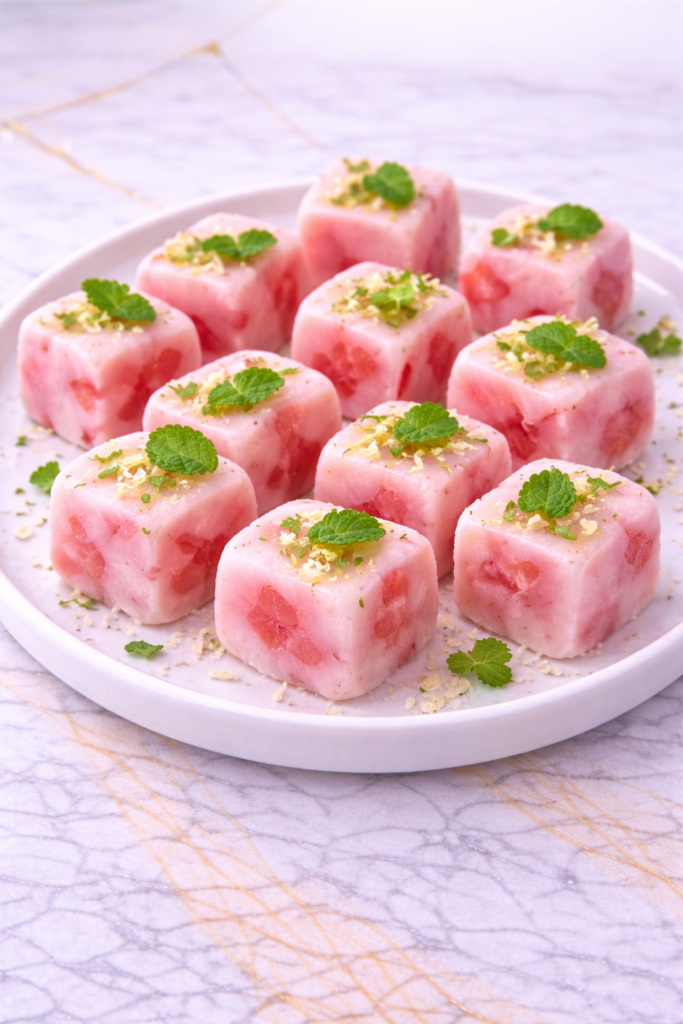
These frozen watermelon yogurt cubes are especially convenient for preparing in advance. Blending a full batch at once allows you to portion steady servings for several days or weeks. Preparing ahead supports consistency and moderation in your treat routine.
After filling the molds, allow the cubes to freeze completely before transferring them to storage containers. Fully frozen cubes are easier to remove and stack without sticking. This step helps preserve their smooth shape.
Once frozen solid, transfer the cubes to an airtight freezer-safe container. Storing them together keeps your freezer organized and reduces exposure to air. Labeling the container with the preparation date helps maintain freshness awareness.
If you prefer smaller portions, use mini silicone molds or a small ice cube tray. Smaller shapes support portion control and make serving simple. This is especially helpful for smaller dogs.
Avoid repeated thawing and refreezing. Remove only the number of cubes you plan to use. Keeping the remaining pieces frozen helps maintain texture and quality.
Maintaining a predictable preparation schedule can simplify treat planning. Making a fresh batch every few weeks keeps supply steady without overstocking.
Step-by-Step Instructions
Step 1: Prepare the Watermelon
Cut 1 cup of seedless watermelon into small cubes. Remove any visible seeds carefully before measuring.
Smaller pieces blend more smoothly. Set aside.
Step 2: Add Ingredients to Blender
Place the watermelon cubes into a blender or food processor. Add 1/2 cup plain unsweetened yogurt.
Pour in 1 tablespoon water. This helps the mixture blend evenly.
Step 3: Blend Until Smooth
Blend on medium speed until the mixture becomes completely smooth. Pause to scrape down the sides if necessary.
Ensure there are no visible chunks remaining. A smooth mixture freezes more evenly.
Step 4: Check Consistency
Observe the blended mixture. It should be pourable but not overly thin.
If too thick, add a small splash of water and blend briefly. If too thin, add a few extra watermelon cubes and blend again.
Step 5: Prepare the Molds
Place silicone molds or an ice cube tray on a baking sheet. This provides stability during transfer.
Ensure the molds are clean and dry before filling.
Step 6: Fill the Molds
Carefully pour or spoon the blended mixture into each mold cavity. Fill slightly below the rim to prevent overflow.
Use a spatula to smooth the tops if needed. This helps create even shapes.
Step 7: Remove Air Bubbles
Tap the baking sheet gently on the counter to release trapped air bubbles. This supports a smooth, even texture.
Inspect each cavity to ensure consistent filling.
Step 8: Freeze Until Firm
Transfer the filled molds carefully to the freezer. Place them on a flat shelf.
Allow the cubes to freeze for 3–4 hours or until completely firm. Avoid disturbing them during this time.
Step 9: Remove from Molds
Once fully frozen, gently pop the cubes out of the molds. If using a rigid tray, allow it to sit at room temperature briefly to loosen.
Work slowly to prevent cracking. Fully frozen cubes should release cleanly.
Step 10: Store Properly
Transfer the frozen cubes to an airtight freezer-safe container. Return them to the freezer promptly.
Seal the container tightly to preserve freshness. Store until ready to serve.
Nutritional Notes for Dogs
Watermelon provides natural sweetness and a high water content. Removing seeds ensures safe preparation.
Plain unsweetened yogurt contributes creaminess and helps create structure once frozen. Choosing yogurt without artificial sweeteners supports simple ingredient control.
Water helps adjust the blending consistency without introducing additional components. It ensures the mixture pours evenly into molds.
These frozen cubes are designed as occasional rewards alongside a complete and balanced diet. Offering them in moderation supports steady feeding routines.
Observing how your dog responds to frozen textures helps guide portioning decisions. A balanced approach keeps treat habits predictable and practical.
Ingredient Swaps and Variations
Dairy-free: Replace the 1/2 cup plain yogurt with 1/2 cup unsweetened coconut milk or a dairy-free plain yogurt alternative without artificial sweeteners. Ensure the substitute is plain and free from added sugars.
Grain-free: The base recipe is naturally grain-free as written. No grains are included in the ingredient list.
Flavor variation: Add 1 tablespoon finely mashed strawberry or blueberry to the blender for a subtle flavor change. Blend thoroughly to maintain a smooth consistency.
Texture adjustment: For creamier cubes, reduce the water slightly. For a firmer frozen texture, add a few extra watermelon cubes before blending.
Mini version: Pour the mixture into mini silicone molds or very small ice cube trays. Smaller portions are convenient for training rewards and easier portion control.
How to Serve Safely
Serve these frozen watermelon yogurt cubes in portions appropriate for your dog’s size. Smaller dogs may need only one small cube, while larger dogs can enjoy a slightly larger piece.
Always supervise your dog while offering frozen treats. Observing chewing habits helps ensure the icy texture is manageable.
These cubes are designed as occasional rewards and should complement a complete and balanced diet. Keep portions modest to maintain routine consistency.
If your dog is not accustomed to frozen foods, allow the cube to sit at room temperature briefly before serving. This slightly softens the texture.
Introduce new ingredients gradually if your dog has not had them before. A steady introduction allows you to observe tolerance and preference.
Common Mistakes to Avoid
Using yogurt that contains artificial sweeteners can introduce unsafe ingredients. Always check labels carefully before blending.
Leaving watermelon seeds in the mixture can create unnecessary risk. Remove seeds completely before measuring.
Overfilling molds may cause spillage during freezing. Leave a small space below the rim.
Not blending thoroughly may leave chunks that freeze unevenly. Ensure a smooth mixture before pouring.
Removing cubes before fully frozen can cause cracking. Allow sufficient freezing time.
Repeated thawing and refreezing can affect texture and freshness. Remove only the portions you plan to serve.
Storage and Freshness Tips
Store fully frozen cubes in an airtight freezer-safe container. Keep the container tightly sealed to prevent freezer burn.
These cubes can be stored in the freezer for up to 2 months. Label the container with the preparation date for organization.
Keep the container toward the back of the freezer where temperature remains consistent. This helps preserve texture.
Before serving, check for ice crystals, discoloration, or unusual odor. Discard any cube that appears questionable.
Avoid storing near strongly scented foods. The cubes may absorb odors over time.
FAQs
Can I use frozen watermelon instead of fresh?
Yes, thaw the watermelon fully and drain excess liquid before blending. This helps maintain proper consistency.
Is this recipe suitable for puppies?
It can be offered in small amounts to puppies already eating solid food. Supervise carefully and adjust portion sizes.
Can I skip the yogurt?
Yes, you may replace it with unsweetened coconut milk. The texture may be slightly less creamy.
How do I know when the cubes are fully frozen?
They should feel firm and solid when pressed gently. The center should not feel soft.
Can I combine watermelon with other fruits?
Yes, small amounts of strawberry or blueberry can be added. Keep the total volume similar for balance.
How often can I give these cubes?
They are best offered occasionally as a complementary reward. Consistent moderation supports balanced routines.
What if my dog prefers softer treats?
Allow the frozen cube to sit at room temperature briefly before serving. This softens the texture slightly.
A Light and Refreshing Treat for Warmer Days
These frozen watermelon yogurt cubes offer a calm and practical way to include a homemade reward in your dog’s routine. With careful preparation and mindful portioning, they fit naturally alongside balanced meals without disrupting consistency.
Over time, simple frozen recipes like this can become part of a steady seasonal rhythm. The recognizable ingredients and gentle preparation make them a dependable and adaptable addition to everyday care.