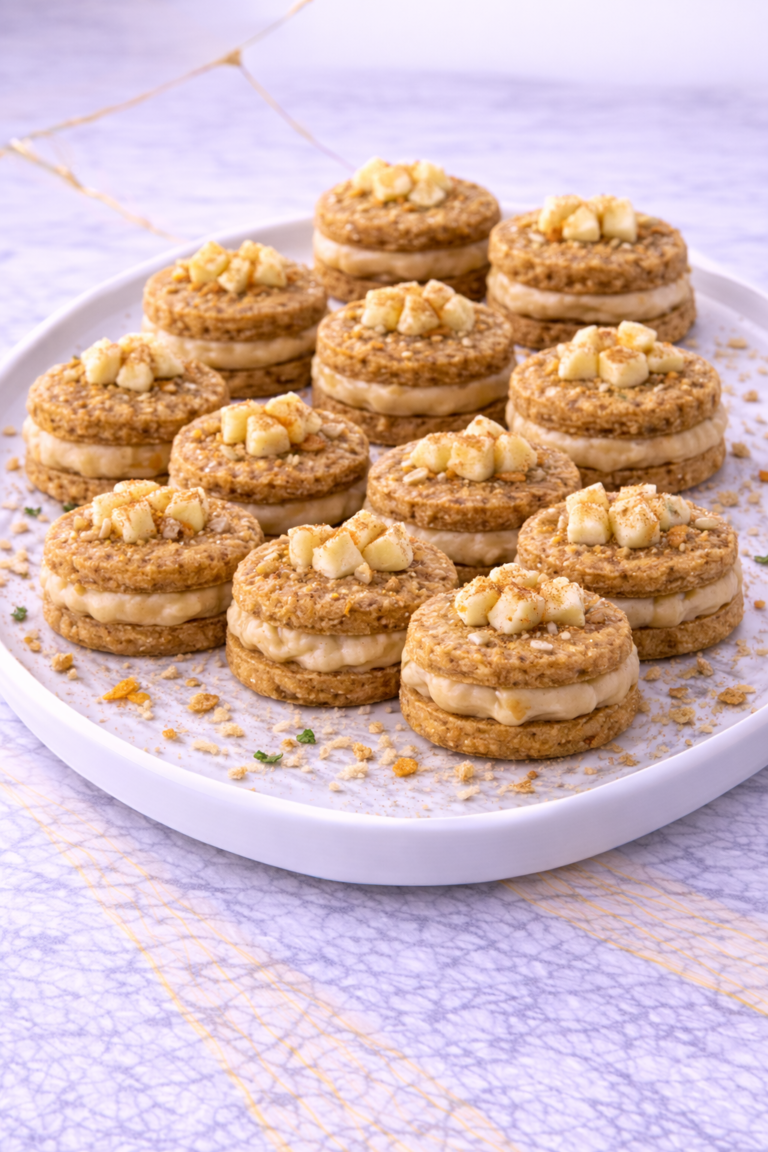

Preparing homemade treats for dogs can be a rewarding way to add variety to everyday routines. Peanut butter bacon sandwich cookies for dogs combine soft baked cookie layers with a savory filling that creates a balanced and flavorful snack. The sandwich-style design gives these treats a layered texture that feels a little different from traditional dog biscuits.

I often enjoy preparing sandwich-style dog treats because they add an extra step that feels creative while still being simple. Two cookie layers are paired together with a soft center, creating a treat that looks thoughtful without requiring complicated preparation. Even basic ingredients can feel special when they are assembled in this way.
Peanut butter is one of the most common ingredients used in homemade dog treats. Its creamy texture blends easily into dough and helps create cookies that bake into a soft but sturdy structure. Many dogs are naturally drawn to the flavor of peanut butter.
Bacon adds a savory element that pairs well with peanut butter in small quantities. When cooked and finely chopped, it blends smoothly into a filling mixture and provides a gentle smoky aroma.
The filling in sandwich cookies is usually kept smooth so it spreads easily between the cookie layers. A simple mixture with yogurt or peanut butter works well for this purpose and helps hold the cookies together.
Another advantage of this recipe is the flexibility when shaping the cookies. The dough can be rolled out and cut into small rounds or other simple shapes. This allows the treat size to be adjusted depending on the dog receiving them.
Homemade dog treats can also create small moments of connection during preparation. Dogs often become curious while dough is being rolled on the kitchen counter or when cookies are baking in the oven. These small moments can become part of the routine of making treats.
Once assembled, the sandwich cookies can be stored for later use. Keeping a container of homemade treats ready can make daily reward moments feel simple and consistent.
Why This Recipe Is Great for Your Dog
One appealing aspect of this recipe is the use of simple ingredients that are easy to work with. Each ingredient is commonly used in homemade dog treats.
The cookies combine a lightly firm peanut butter base with a soft savory filling in the center. This contrast in texture can make the treats more interesting for dogs to chew.
Preparation is also straightforward. The dough mixes quickly and can be rolled easily before baking.
Dogs often respond well to the flavor combination of peanut butter and bacon. When used in small amounts, the flavors remain balanced and mild.
Another advantage of this recipe is the ability to prepare multiple cookies in one batch. A short baking session can produce several sandwich treats for later use.
Ingredients
- 1 cup whole wheat flour
- ½ cup natural peanut butter (xylitol-free)
- 1 egg
- 2 tablespoons water
- 2 slices cooked bacon, finely chopped
- ½ cup plain Greek yogurt
Tools You’ll Need
- Mixing bowl
- Measuring cups
- Measuring spoons
- Wooden spoon or spatula
- Rolling pin
- Cookie cutter
- Baking sheet
- Parchment paper
- Cooling rack
- Small spreading knife or spoon
- Storage container
Pro Tips
Always check that the peanut butter does not contain xylitol. This ingredient should never be included in dog treats.
Cook the bacon until it is fully done before adding it to the recipe. Finely chopping the bacon helps it blend more evenly into the filling.
If the dough feels sticky while rolling, lightly dust the work surface with flour. This helps prevent sticking and makes shaping easier.
Roll the dough to an even thickness so the cookies bake evenly. Consistent thickness helps maintain the cookie shape.
Allow the cookies to cool completely before adding the filling. Cooling helps the sandwich cookies hold together properly.
Prepare smaller cookies if serving treats to smaller dogs. Smaller sandwich cookies can be easier to portion.

How Long This Recipe Takes
Preparing the dough usually takes about fifteen minutes. This includes measuring the ingredients and mixing them until the dough forms.
Rolling and shaping the cookies generally takes another ten to fifteen minutes. The exact time depends on how many cookies are cut from the dough.
Baking the cookies typically takes about fifteen minutes. During this time the cookies firm up and begin holding their shape.
After baking, the cookies should cool completely before assembling the sandwich layers. Allowing them to cool for about twenty minutes helps maintain their structure.
Although the recipe includes several steps, each stage remains simple and manageable. The process flows naturally from mixing to baking and assembling.
The entire preparation process can usually be completed in about one hour. Once assembled, the cookies can be stored or served as needed.
Make-Ahead Tips
The cookie bases can be prepared in advance if needed. Once baked and cooled, the cookies can be stored in a sealed container until ready to assemble.
Preparing the cookie bases ahead of time can make the final assembly quicker. The bacon filling can be added later when the cookies are ready to serve.
If making a larger batch, the cookie bases can be frozen before filling them. Freezing helps extend their storage life.
When freezing cookies, store them in airtight containers or freezer-safe bags. This helps protect their texture.
When ready to use frozen cookie bases, allow them to thaw at room temperature before assembling the sandwich cookies.
Preparing cookie bases ahead of time can make treat preparation more flexible during busy days.
Step-by-Step Instructions
Step 1: Prepare the Oven
Preheat the oven to 350°F (175°C). Line a baking sheet with parchment paper to prevent sticking.
Set the prepared baking sheet aside.
Step 2: Mix the Dough
Place the whole wheat flour, peanut butter, egg, and water into a mixing bowl. Stir the ingredients together until they begin forming a soft dough.
Continue mixing until the dough holds together.
Step 3: Prepare the Dough for Rolling
Place the dough onto a lightly floured surface. Use a rolling pin to roll the dough to an even thickness.
Aim for about ¼ inch thickness so the cookies bake evenly.
Step 4: Cut the Cookies
Use a cookie cutter to cut shapes from the rolled dough. Round shapes work well for sandwich-style treats.
Place the cut cookie pieces onto the prepared baking sheet.
Step 5: Bake the Cookies
Place the baking sheet into the oven and bake the cookies for about fifteen minutes. The cookies should become lightly firm as they bake.
Remove the baking sheet from the oven once the cookies are set.
Step 6: Cool the Cookies
Transfer the cookies to a cooling rack and allow them to cool completely. Cooling helps the cookies firm up.
Do not add the filling until the cookies are fully cooled.
Step 7: Prepare the Cookie Pairs
Once the cookies have cooled, arrange them in matching pairs. This prepares them for assembling the sandwich cookies with the bacon filling in the next step.
Ingredient Swaps and Variations
- Grain-free: Replace the whole wheat flour with oat flour or another dog-safe grain-free flour blend. When using alternative flour, small adjustments to the dough moisture may help maintain a workable consistency.
- Protein variation: Finely shredded cooked chicken or turkey can replace the bacon in the filling. These options provide a savory flavor while blending smoothly with the other ingredients.
- Nut-free option: Sunflower seed butter can replace peanut butter if a nut-free alternative is preferred. Choose a plain variety with no added sweeteners.
- Texture adjustment: For firmer cookies, bake them slightly longer until they become lightly crisp. For softer cookies, reduce the baking time slightly while monitoring the texture.
- Mini sandwich version: Use smaller cookie cutters to create bite-sized sandwich cookies. Smaller treats can work well for training rewards or for smaller dogs.
Nutritional Notes for Dogs
Peanut butter is frequently used in homemade dog treat recipes because of its smooth texture and familiar flavor. When mixed into cookie dough, it helps create a sturdy base that holds its shape after baking.
Bacon contributes a savory aroma and flavor that many dogs find appealing. When cooked thoroughly and chopped finely, it blends easily into the filling mixture.
Whole wheat flour provides the structural base for the cookie layers. Combined with egg and peanut butter, it forms a dough that can be rolled and shaped before baking.
Greek yogurt creates a smooth and spreadable filling between the cookie layers. Its thick consistency helps hold the sandwich cookies together.
Egg serves as a binding ingredient that helps maintain the structure of the cookie dough during baking. This supports a consistent texture throughout the cookies.
Homemade dog treats should be offered occasionally rather than replacing regular meals. Moderation helps maintain balanced feeding routines.
How to Serve Safely
Portion size should match the size of the dog receiving the treat. Smaller dogs may benefit from smaller sandwich cookies, while larger dogs may comfortably manage slightly larger portions.
Supervising dogs during treat time helps ensure they chew comfortably. Observing how a dog interacts with a new treat can help guide portion adjustments.
These sandwich cookies can be served during calm bonding moments or used as occasional rewards. Their layered structure creates a small variation compared to traditional biscuits.
If the cookies are larger than necessary, they can be broken into smaller pieces before serving. This helps control portion size.
Moderation remains important when offering homemade treats. Even simple recipes should remain a small part of a dog’s overall feeding routine.
Common Mistakes to Avoid
One common mistake is using peanut butter that contains xylitol. This ingredient should never be included in dog treats, so labels should always be checked carefully.
Another issue occurs when bacon is not cooked thoroughly before being used in the recipe. Fully cooked bacon ensures proper texture and preparation.
Rolling the dough too thin may cause the cookies to become overly crisp during baking. Maintaining even thickness helps preserve the structure of the cookies.
Skipping the cooling step before adding the filling may cause the sandwich cookies to soften too quickly. Allowing the cookies to cool completely helps maintain their shape.
Using too much filling may make the cookies difficult to assemble. A thin layer is usually enough to hold the cookie halves together.
Improper storage may reduce the freshness of the treats. Airtight containers help preserve texture and quality.
Storage and Freshness Tips
Once assembled, the sandwich cookies should be stored in the refrigerator. The bacon filling remains fresher when kept chilled.
Place the cookies in an airtight container before refrigerating. Proper storage helps prevent them from drying out or absorbing other refrigerator odors.
For short-term storage, the cookies usually remain fresh in the refrigerator for several days. Keeping them sealed helps maintain their texture.
If preparing a larger batch, the cookie bases can be frozen before adding the filling. Freezing the baked cookies helps extend their storage life.
When ready to assemble frozen cookie bases, allow them to thaw at room temperature before adding the filling.
Before serving stored treats, inspect them for any unusual smell or appearance. If anything seems unusual, the treats should be discarded.
FAQs
Can dogs safely eat peanut butter in homemade treats?
Yes, peanut butter is commonly used in dog treat recipes when it does not contain xylitol or artificial sweeteners.
Is bacon safe for dogs in homemade treats?
Small amounts of fully cooked bacon can be used in homemade dog treats. It is typically added in small quantities for flavor.
Do these sandwich cookies need to be refrigerated?
Yes, because the filling contains yogurt and bacon, the assembled cookies should be stored in the refrigerator.
Can I replace whole wheat flour in this recipe?
Yes, oat flour or another dog-safe flour blend can replace whole wheat flour. Small adjustments to dough consistency may be needed.
Can these cookies be made in smaller sizes?
Yes, smaller cookie cutters can be used to create bite-sized sandwich cookies. Smaller portions can be helpful for training rewards.
Can the cookie bases be prepared ahead of time?
Yes, the cookie bases can be baked and stored before adding the filling. This can make the final assembly quicker.
How long do these cookies stay fresh?
When stored in a sealed container in the refrigerator, these cookies usually remain fresh for several days.
A Savory Homemade Sandwich Treat
Peanut butter bacon sandwich cookies for dogs offer a savory variation on traditional homemade dog biscuits. The combination of peanut butter cookie layers and a soft bacon filling creates a balanced texture with a gentle flavor.
With simple ingredients and a straightforward preparation process, this recipe can easily fit into a routine of making occasional dog treats. Once prepared and stored properly, the cookies can be ready whenever a small reward feels appropriate.