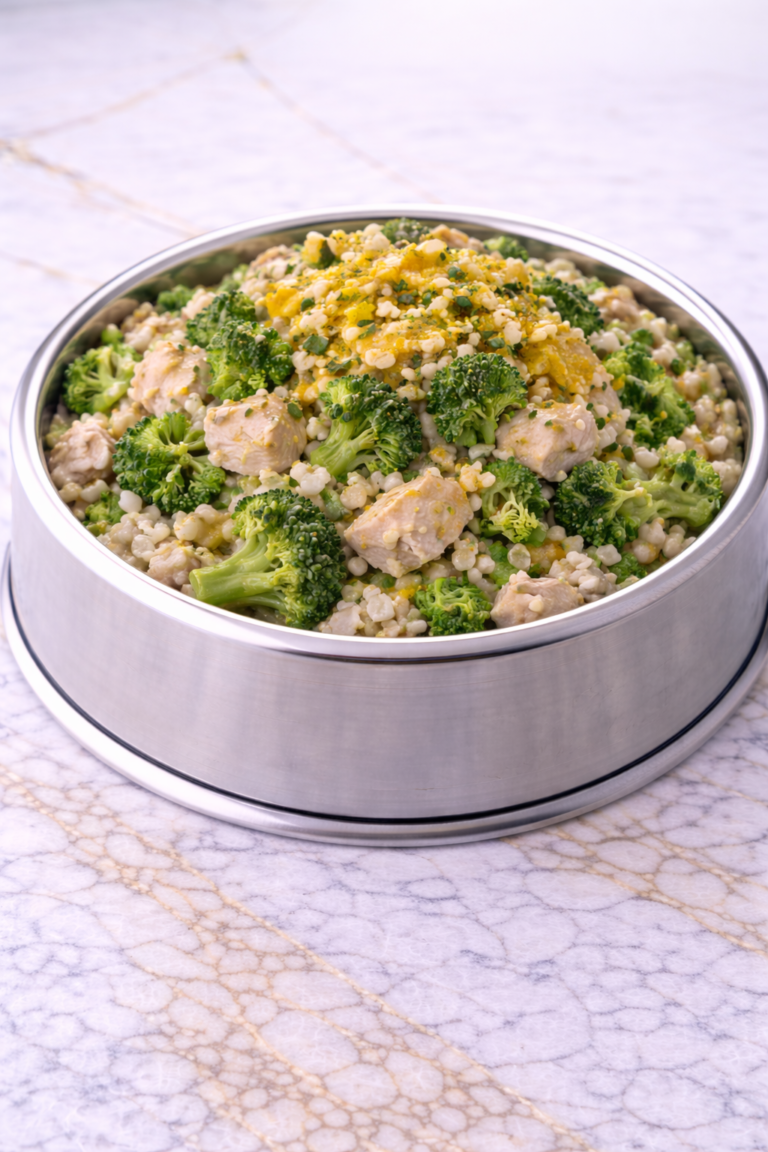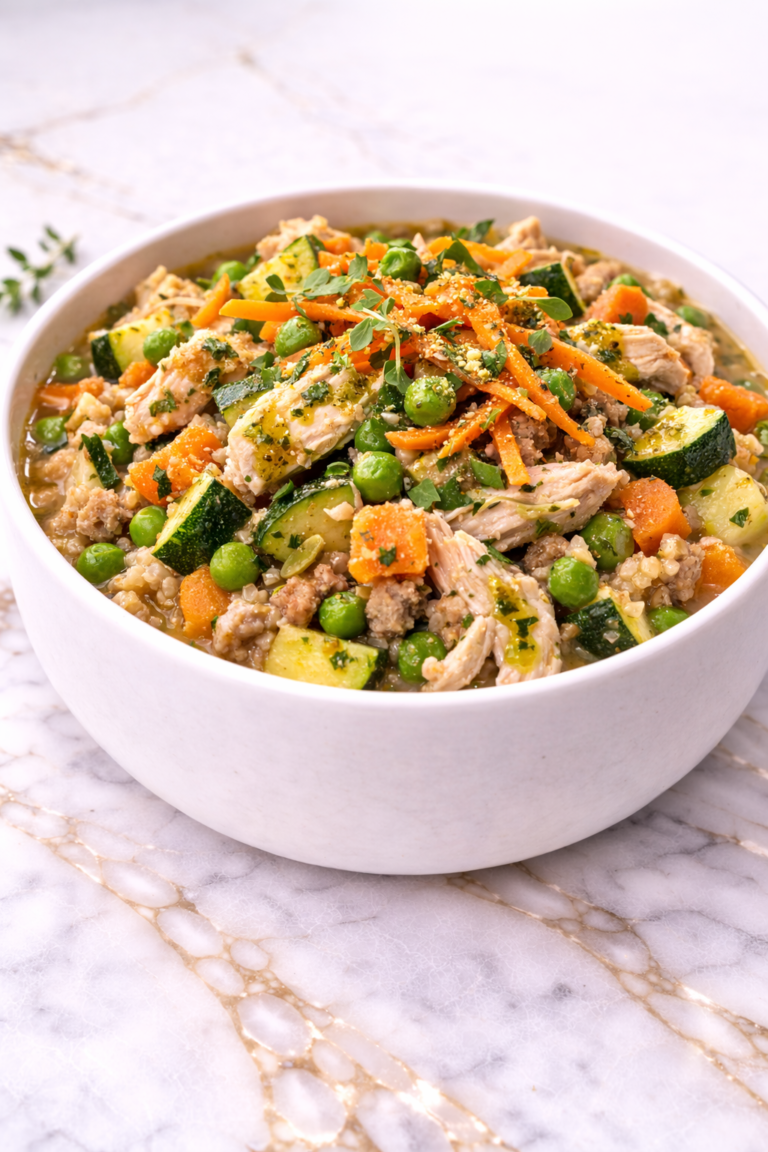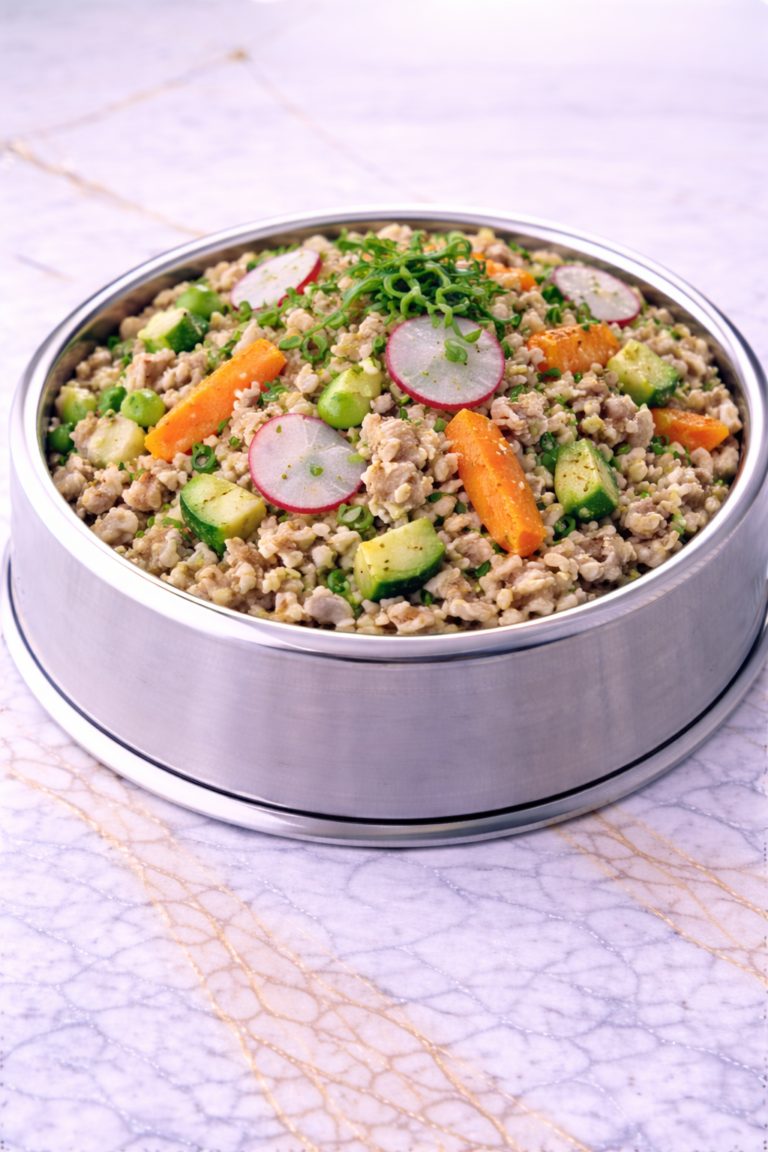

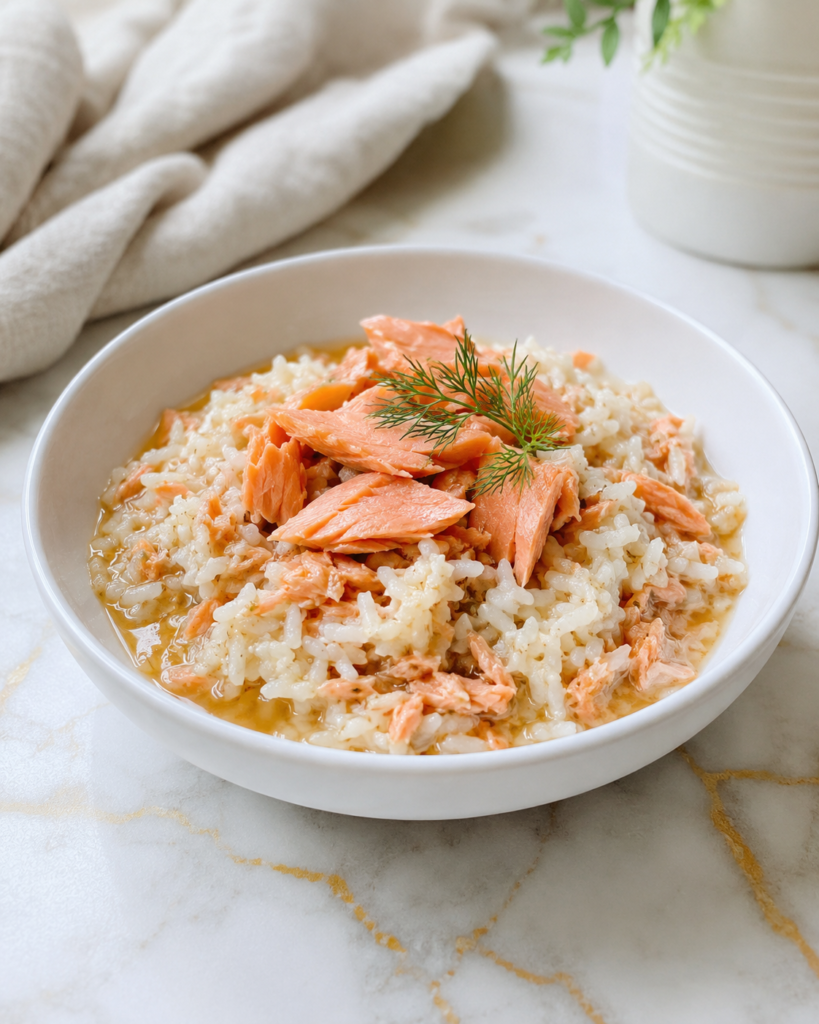
Salmon & Rice Dog Food Topper is a simple homemade addition that feels gentle, savory, and easy to prepare. I enjoy making recipes like this because they use familiar ingredients and can be portioned into small servings for regular meal routines.
There is something thoughtful about adding a little plain salmon and rice to your dog’s usual bowl. It can bring moisture, aroma, and a softer texture without replacing the food your dog already eats.
This topper works well when you want to add variety in a calm and controlled way. A small spoonful mixed into regular food can make the meal feel more cared for while keeping the routine steady.
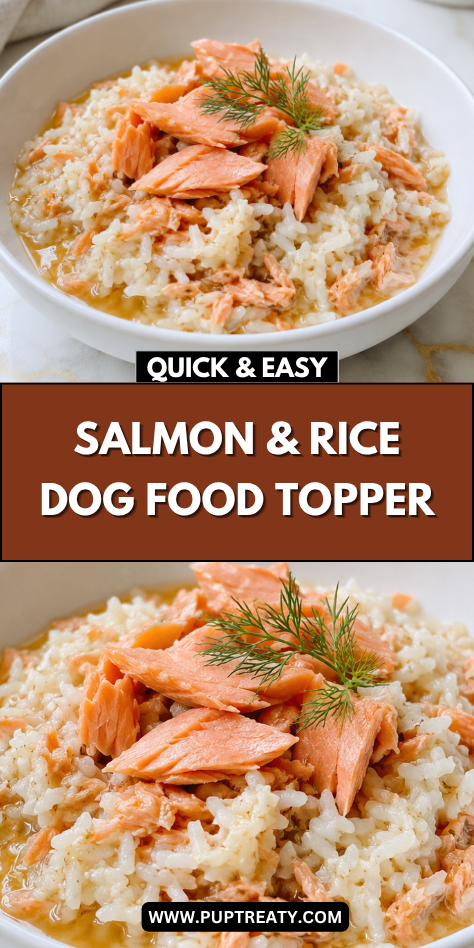
I like that this recipe is easy to keep plain. The salmon is cooked without seasoning, the rice is simple, and the final texture can be adjusted based on your dog’s preference.
This recipe is meant to be a complementary topper, not a complete diet. It should be served in moderation alongside your dog’s regular balanced food.
Why This Recipe Is Great for Your Dog
This recipe uses simple ingredients that are easy to recognize. Plain cooked salmon, cooked white rice, and a little water come together into a soft, spoonable topper.
The texture is gentle and easy to mix into regular meals. The rice helps create a mild base, while the salmon adds a soft, flaky texture and savory aroma.
The preparation is beginner-friendly and does not require advanced cooking skills. Most of the work involves cooking the salmon, preparing the rice, checking carefully for bones, and mixing everything together.
Dogs often enjoy the smell of salmon. Even a small amount can make a regular bowl feel more interesting without using sauces, salt, butter, or seasoning.
This topper is also easy to portion by dog size. Small dogs may need only a teaspoon or two, while larger dogs may use a tablespoon or two mixed into their food.
It is a useful recipe for make-ahead meal prep. You can prepare a small batch, refrigerate a few portions, and freeze the rest for later use.
Ingredients
- 1 cup cooked salmon, skin removed and bones checked
- 1 cup cooked white rice
- 1/4 cup water
- 1 tablespoon plain cooked carrot, finely mashed, optional
Tools You’ll Need
- Cutting board
- Sharp knife
- Small saucepan with lid
- Baking sheet or skillet
- Parchment paper, if baking salmon
- Fork
- Measuring cups
- Measuring spoons
- Mixing bowl
- Wooden spoon or silicone spatula
- Airtight storage container
- Ice cube tray
- Freezer-safe bag or container
- Refrigerator-safe container
Pro Tips
Use plain salmon with no seasoning, sauce, butter, oil, garlic, or onion. The salmon should be cooked simply and kept mild for your dog’s bowl.
Check the salmon very carefully for bones before mixing. Even small bones should be removed so the topper is smooth and safe to spoon into food.
Remove the skin if it feels oily or heavily cooked. Plain cooked salmon flesh is easier to flake and mix evenly with rice.
Use soft cooked white rice for a gentle texture. Rice that is too dry may not blend well into the topper and may need a small splash of water.
Keep the topper moist but not soupy. Add water gradually so the mixture stays spoonable and easy to portion.
Cool the topper before serving or storing. Warm food can hold heat in the center, so check the temperature carefully before adding it to your dog’s bowl.
How Long This Recipe Takes
Preparation takes about 10 to 15 minutes if your rice is already cooked. This includes cooking or flaking the salmon, checking for bones, measuring the ingredients, and mixing the topper.
If you are cooking rice from scratch, add about 15 to 20 extra minutes. The rice should be soft, plain, and cooled slightly before mixing.
Cooking the salmon usually takes about 10 to 15 minutes, depending on the thickness of the fillet and the method used. It should be cooked through and easy to flake with a fork.
The full recipe usually takes about 30 to 40 minutes if you are cooking both the salmon and rice fresh. It has a calm flow and works well for small batch meal prep.
If you plan to freeze portions, allow extra time for cooling and freezing. Ice cube trays usually need at least 2 to 3 hours to freeze solid.
Make-Ahead Tips
Salmon & Rice Dog Food Topper is a good make-ahead recipe because it portions easily. You can prepare a small batch and use it over several meals as a gentle addition.
For batch preparation, cook the salmon and rice separately, then let both cool slightly. Flake the salmon, check for bones, and mix it with the rice and water.
Refrigeration works well for short-term use. Keep the topper in an airtight container and use it within a few days.
For longer storage, freeze the topper in small portions. Ice cube trays are helpful because they create serving sizes that are easy to thaw.
Once frozen, move the cubes into a freezer-safe bag or container. Label the container with the date so you can track freshness.
Thaw frozen topper portions in the refrigerator before serving. Avoid thawing and refreezing the same portion repeatedly, and use small cubes so you only thaw what you need.
Step-by-Step Instructions
Step 1: Prepare the Salmon
Choose plain salmon without seasoning, sauce, or marinade. Remove any packaging and place the salmon on a clean surface.
If the salmon has skin, you can leave it on during cooking and remove it afterward. This can make handling easier while keeping the final topper simple.
Step 2: Cook the Salmon
Bake the salmon on a parchment-lined baking sheet at 350°F for about 10 to 15 minutes. You can also cook it gently in a plain skillet with a splash of water.
The salmon should be fully cooked and easy to flake. Avoid browning it heavily or adding oil, butter, salt, or spices.
Step 3: Cool the Salmon
Let the cooked salmon cool until it is safe to handle. Do not mix or store it while it is still hot.
Cooling makes it easier to remove the skin and check for bones. It also helps prevent steam from building in the storage container.
Step 4: Remove Skin and Check for Bones
Remove the skin from the cooked salmon. Flake the salmon slowly with a fork and check carefully for small bones.
Take your time with this step. The finished topper should contain only soft salmon pieces, with no sharp or hard bits.
Step 5: Prepare the Rice
Use 1 cup of plain cooked white rice. The rice should be soft and free from salt, butter, oil, broth, garlic, onion, or seasoning.
If the rice is cold from the refrigerator, loosen it with a fork. This helps it mix evenly with the salmon.
Step 6: Add Salmon and Rice to a Bowl
Place the flaked salmon and cooked rice into a mixing bowl. Stir gently so the salmon spreads through the rice without becoming too mashed.
The mixture should look soft and evenly combined. Keep the texture simple and easy to spoon.
Step 7: Add Water
Add 1/4 cup water to the bowl. Stir slowly until the mixture becomes moist and spoonable.
If the topper still feels dry, add a tiny splash more water. Avoid making it too runny, especially if you plan to freeze portions.
Step 8: Add Optional Carrot
If using plain cooked carrot, mash it finely before adding it to the bowl. Stir it into the salmon and rice mixture until evenly combined.
Use only plain carrot with no butter, salt, sugar, or seasoning. The carrot should be soft enough to blend into the topper.
Step 9: Check the Texture
Spoon a small amount into a bowl and check the consistency. It should be moist, soft, and easy to mix into regular food.
If the mixture is too thick, add a small amount of water. If it is too wet, add a little more cooked rice.
Step 10: Cool Completely
Let the topper cool to room temperature before serving or storing. Stir it once more so the moisture is evenly spread.
Do not add hot topper directly to your dog’s food. A cool or slightly warm serving is safer and more comfortable.
Step 11: Portion for Serving
Spoon the cooled topper into small portions based on your dog’s size. Small dogs may need teaspoon-size portions, while larger dogs may use tablespoon-size portions.
Keep the serving small so it remains a topper. It should support the regular meal, not replace it.
Step 12: Store Safely
Place the remaining topper in a refrigerator-safe container or ice cube tray. Cover tightly and refrigerate or freeze as needed.
If freezing, move the solid cubes into a freezer-safe bag or container. Label the batch with the date so you can use it within a safe time.
Nutritional Notes for Dogs
Salmon & Rice Dog Food Topper is meant to be served as a small addition to your dog’s regular food. It is not a complete meal and should not replace a balanced daily diet.
Salmon gives this topper a soft, flaky texture and a savory aroma that many dogs enjoy. It should always be cooked plain, with the skin removed if needed and all bones checked carefully.
White rice creates a mild, soft base that blends easily with the salmon. It helps the topper become spoonable and easy to mix into regular meals.
Water adds moisture and keeps the mixture from feeling dry. A small amount is enough to loosen the texture without turning the topper into a soup.
If you include plain cooked carrot, keep it soft and finely mashed. It should be used only as a small optional addition, not as the main part of the recipe.
This topper should be served in moderation. A small spoonful can add variety and moisture, but too much can crowd your dog’s usual food.
A balanced feeding routine helps keep this recipe in the right place. Think of it as a gentle addition to the bowl, not the main meal.
If your dog is trying salmon or rice as a topper for the first time, start with a small amount. Watch how your dog responds to the smell, texture, and ingredients before using it more often.
Ingredient Swaps and Variations
- Dairy-free: This recipe is naturally dairy-free as written, so no dairy swap is needed.
- Grain-free: Replace the rice with plain cooked mashed sweet potato for a grain-free style topper.
- Flavor variation: Use plain cooked turkey or chicken in place of salmon for a milder meat-based topper.
- Texture adjustment: Add a little extra water for a softer mixture, or add more cooked rice for a thicker spoonable texture.
- Mini version: Freeze the topper in small ice cube trays for tiny portions suited to small dogs or light meal topping.
How to Serve Safely
Serve Salmon & Rice Dog Food Topper in small portions based on your dog’s size. Small dogs may need 1 to 2 teaspoons, while medium or large dogs may use 1 to 2 tablespoons mixed into food.
Add the topper to your dog’s regular meal instead of serving it as a separate full dish. This keeps the recipe in the role of a topper and helps maintain a steady feeding routine.
Make sure the topper is cool or only slightly warm before serving. Salmon and rice can hold heat in the center, so stir well and check the temperature before adding it to the bowl.
Always check the salmon carefully for bones before serving. Even small bones should be removed so the texture stays soft and safe to spoon into food.
Stir the topper into the food so it spreads evenly. This helps coat the meal with moisture and keeps your dog from picking out only the salmon pieces.
Supervise your dog when offering any new meal addition. Watch their pace, interest, and comfort, especially the first few times you serve it.
Use this topper for gentle meal variety, occasional food softening, or simple weekly meal prep. Keep the serving plain and avoid adding rich sauces or extra ingredients.
Common Mistakes to Avoid
Using seasoned salmon is one of the most important mistakes to avoid. Salmon cooked with salt, butter, oil, garlic, onion, sauces, or spice blends should not be used for dogs.
Forgetting to check for bones can make the topper unsafe. Flake the salmon slowly with a fork and feel through it carefully before mixing.
Using rice cooked with broth or seasoning can add ingredients your dog does not need. Use plain white rice cooked in water only.
Adding too much water can make the topper runny. Start with the measured amount, then add more only if the mixture feels too dry.
Serving the topper while it is too hot can be uncomfortable for your dog. Let it cool and stir well before adding it to the food bowl.
Using salmon skin that is oily or heavily cooked can make the topper richer than intended. Remove the skin if it feels greasy or tough.
Serving too much topper can crowd your dog’s regular meal. Keep the portion small so it supports the meal instead of replacing it.
Skipping proper cooling before storage can affect freshness. Let the mixture cool completely before sealing it in containers or freezing it in trays.
Leaving thawed topper out too long can shorten freshness. Keep thawed portions refrigerated and use them within a safe window.
Freezing in large portions can make serving less convenient. Small cubes thaw faster and make it easier to use only what your dog needs.
Storage and Freshness Tips
Store cooled Salmon & Rice Dog Food Topper in an airtight container in the refrigerator. Use refrigerated topper within 2 to 3 days for the best freshness.
Keep the container sealed between servings. Use a clean spoon each time so the mixture does not pick up crumbs or food bits from the bowl.
Room-temperature storage is not recommended for this recipe. Because it contains cooked fish and rice, it should be refrigerated soon after cooling.
For longer storage, freeze the topper in small portions. Ice cube trays are useful because they create easy serving sizes for meal topping.
Once the cubes are frozen solid, transfer them to a freezer-safe bag or container. Label the bag with the date so you can track the batch.
Frozen salmon and rice topper can be stored for up to 2 months. Smaller portions help you thaw only what you need for one meal at a time.
Thaw frozen cubes in the refrigerator before serving. You can warm the thawed portion gently, but it should not be hot when added to your dog’s food.
Check the topper before using it. Discard it if it smells sour, fishy in an unpleasant way, feels slimy, shows mold, or looks different from when it was made.
If the rice firms up after chilling, stir in a tiny amount of warm water before serving. The texture should be soft and easy to mix into the regular meal.
FAQs
Can dogs eat salmon and rice topper?
Yes, many dogs can enjoy plain cooked salmon and rice as a small meal topper. The salmon should be fully cooked, unseasoned, and carefully checked for bones.
Can I use canned salmon?
You can use canned salmon only if it is plain, packed in water, and free from added salt or seasoning. Check carefully for bones before mixing.
Should I use white rice or brown rice?
White rice works well because it has a soft, mild texture. Brown rice can be used if your dog already tolerates it, but it has a firmer texture.
Can I add vegetables?
Yes, you can add a small amount of plain cooked carrot. Keep it soft, finely mashed, and free from butter, salt, sugar, or seasoning.
How much should I serve?
Small dogs may need 1 to 2 teaspoons, while larger dogs may use 1 to 2 tablespoons. Start small and adjust based on your dog’s normal routine.
How long does it last in the refrigerator?
It lasts about 2 to 3 days in a sealed container. Always check the smell, texture, and appearance before serving.
Can I freeze this topper?
Yes, this topper freezes well in small portions. Freeze it in ice cube trays, then thaw only what you need in the refrigerator.
A Gentle Salmon Rice Topper for Everyday Bowls
Salmon & Rice Dog Food Topper is a simple homemade addition that can bring moisture, soft texture, and savory aroma to your dog’s regular meals. With plain ingredients, careful bone checks, small portions, and safe storage, it fits naturally into calm feeding routines while keeping mealtime balanced and thoughtfully prepared.