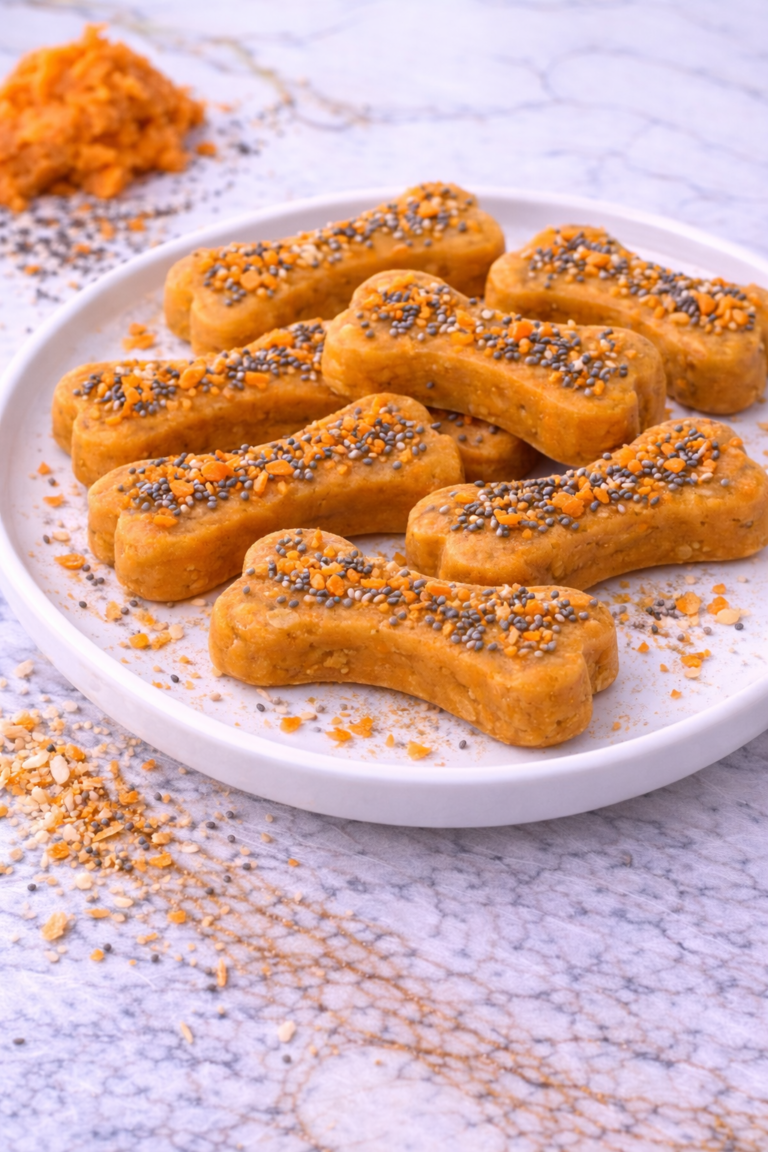

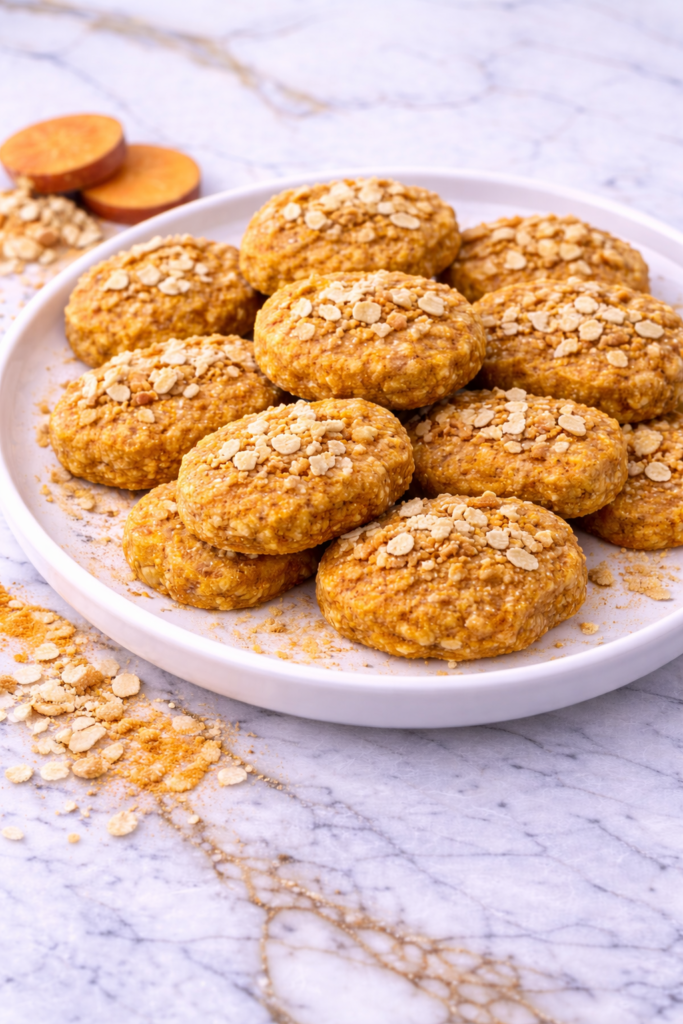
Preparing homemade dog cookies can be a comforting way to add a little extra care to a dog’s daily routine. Sweet potato oat dog cookies combine simple pantry ingredients to create a mildly sweet, crunchy biscuit that many dogs enjoy. With a balanced texture and familiar flavors, these cookies can fit easily into occasional treat moments.

I enjoy baking dog cookies that rely on wholesome ingredients that are easy to recognize. Sweet potatoes and oats are commonly used in homemade dog recipes because they mix together smoothly and form a dough that is simple to shape. The baking process is calm and approachable, even for beginners.
Sweet potatoes bring natural sweetness and moisture to the dough. When cooked and mashed, they create a smooth base that blends easily with other ingredients. This helps form a dough that bakes into cookies with a lightly crisp exterior.
Rolled oats add gentle texture and structure to the recipe. They help balance the moisture from the sweet potato and contribute to the slightly crunchy finish once the cookies cool. Together, these ingredients create a simple but satisfying treat.
Another reason this recipe feels practical is the flexibility in shaping the cookies. The dough can be rolled out and cut into shapes or sliced into small squares. This makes it easy to adjust the treat size depending on the dog receiving them.
Homemade dog cookies can also create small moments of connection during the day. Dogs often notice when something interesting is happening in the kitchen and may sit nearby while ingredients are being mixed and shaped. These quiet moments can become part of everyday routines.
Keeping a container of freshly baked dog cookies nearby can make daily rewards easier. Whether offered after a walk or during a calm training session, homemade treats can add a thoughtful touch to a dog’s routine.
Why This Recipe Is Great for Your Dog
One of the most appealing aspects of this recipe is the simplicity of the ingredients. Each ingredient is easy to recognize and commonly used in homemade dog treat recipes.
The texture of these cookies becomes lightly crisp once fully cooled. Baking the dough slowly helps create a firm biscuit that holds its shape well.
Preparation is also straightforward. Once the sweet potato is mashed, the dough forms quickly when mixed with oats and flour.
Dogs often respond well to the mild sweetness of sweet potatoes. The natural flavor blends easily with oats and creates a balanced biscuit.
Another advantage of baked cookies is their convenience for storage. Once cooled completely, they can be stored easily and served throughout the week.
Ingredients
- 1 cup mashed cooked sweet potato
- 1 cup whole wheat flour
- 1 cup rolled oats
- 1 large egg
- 2 tablespoons water
- 1 tablespoon coconut oil
Tools You’ll Need
- Mixing bowl
- Fork or potato masher
- Cutting board
- Knife
- Measuring cups
- Measuring spoons
- Spoon or spatula
- Rolling pin
- Cookie cutter or knife for shaping
- Baking sheet
- Parchment paper
- Cooling rack
- Airtight storage container
Pro Tips
Cook the sweet potato until it becomes very soft before mashing. A smooth mash helps the dough mix evenly and prevents lumps.
Allow the mashed sweet potato to cool slightly before mixing it with the other ingredients. This helps maintain a balanced dough texture.
If the rolled oats are large, pulse them briefly in a food processor. Smaller pieces can help the dough hold together more easily.
If the dough feels sticky while shaping, lightly dust the surface with flour. This makes rolling and cutting shapes easier.
Roll the dough to an even thickness so the cookies bake consistently. Uneven dough may cause some pieces to bake faster than others.
Allow the cookies to cool completely after baking. Proper cooling helps them develop their final crisp texture.
How Long This Recipe Takes
Preparing the ingredients usually takes about fifteen minutes. This includes cooking and mashing the sweet potato if it has not already been prepared.
Mixing the dough and shaping the cookies generally takes another fifteen minutes. Rolling and cutting shapes may take slightly longer depending on the number of cookies.
Baking the cookies typically takes about twenty-five to thirty minutes. During this time the dough firms up and begins developing a lightly golden color.
Once baked, the cookies should cool on a rack for at least twenty minutes. Cooling helps the cookies develop their final crisp texture.
Overall, the entire process can usually be completed within about one hour. The steps remain simple and manageable from start to finish.
Make-Ahead Tips
The dough for these cookies can be prepared ahead of time if needed. Once mixed, it can be wrapped and stored in the refrigerator for several hours before baking.
Preparing a larger batch can also be helpful for households with multiple dogs. Doubling the ingredients allows more cookies to be baked in one session.
Once baked and cooled, the cookies can be stored in airtight containers for convenient access throughout the week. Proper storage helps maintain their crisp texture.
Freezing is another useful option for longer storage. Once cooled completely, the cookies can be placed in freezer-safe containers or bags.
Portioning the cookies before freezing can make serving easier later. Small batches can be thawed when needed.
When thawing frozen cookies, allow them to rest briefly at room temperature before serving. This helps restore their natural texture.
Step-by-Step Instructions
Step 1: Prepare the Sweet Potato
Cook the sweet potato until it becomes soft enough to mash easily. This can be done by baking, steaming, or boiling the potato until tender.
Once cooked, remove the skin if necessary and mash the sweet potato until smooth. Measure one cup for the recipe.
Step 2: Combine the Wet Ingredients
Place the mashed sweet potato into a mixing bowl. Add the egg and coconut oil.
Stir the ingredients together until they form a smooth mixture. This mixture will serve as the base of the dough.
Step 3: Add the Dry Ingredients
Add the whole wheat flour and rolled oats to the bowl. Stir gradually while combining the ingredients.
Continue mixing until the mixture begins forming a soft dough.
Step 4: Adjust the Dough
Add the water and continue mixing until the dough becomes smooth and workable. If the dough feels sticky, sprinkle in a small amount of flour.
The dough should be firm enough to roll without sticking heavily.
Step 5: Roll the Dough
Place the dough on a lightly floured surface. Use a rolling pin to roll it to about ¼ inch thickness.
Keeping the dough evenly rolled helps ensure the cookies bake consistently.
Step 6: Cut the Cookies
Use a cookie cutter or knife to cut the dough into shapes suitable for your dog’s size. Smaller shapes are often convenient for training rewards.
Place the shaped pieces onto a parchment-lined baking sheet.
Step 7: Bake the Cookies
Place the baking sheet in a preheated oven at 350°F. Bake the cookies for about 25 to 30 minutes until they become firm and lightly golden.
Remove the cookies from the oven and transfer them to a cooling rack. Allow them to cool completely before storing or serving.
Ingredient Swaps and Variations
- Dairy-free: This recipe is naturally dairy-free when prepared with simple ingredients. Always review packaged ingredients to confirm they contain no hidden dairy components.
- Grain-free: Replace the whole wheat flour and rolled oats with oat flour or a dog-safe grain-free flour blend. Slight adjustments to moisture may be needed to maintain a workable dough.
- Flavor variation: Mashed pumpkin or mashed banana can replace part of the sweet potato for a slightly different flavor while keeping a similar dough consistency.
- Texture adjustment: For crispier cookies, roll the dough slightly thinner and extend the baking time by a few minutes. For a softer cookie, roll the dough slightly thicker and reduce the baking time slightly.
- Mini version: Use mini cookie cutters or slice the dough into very small squares to create bite-sized cookies. Smaller treats can be helpful during training sessions.
Nutritional Notes for Dogs
Sweet potatoes are often used in homemade dog treat recipes because they mash easily and provide natural sweetness. Their soft texture allows them to blend smoothly with other ingredients in the dough.
Rolled oats help add gentle texture and structure to the cookies. They absorb moisture from the mashed sweet potato and contribute to the final biscuit consistency.
Whole wheat flour provides stability to the dough during baking. It helps the cookies hold their shape while developing a lightly firm exterior.
Eggs serve as a natural binder in baked dog treats. They help the ingredients stay combined so the cookies maintain their structure during baking.
Coconut oil contributes a small amount of moisture and helps the dough blend smoothly. When used in moderation, it helps create a balanced dough texture.
Homemade dog cookies should be offered as occasional treats rather than replacing regular meals. Providing them in moderation supports a balanced feeding routine.
How to Serve Safely
Portion size should always match the size and chewing habits of the dog receiving the treat. Smaller dogs generally benefit from smaller cookies, while larger dogs may comfortably manage slightly larger pieces.
Supervising dogs during treat time helps ensure they chew comfortably. Observing how a dog interacts with a new cookie can help confirm the size and texture are appropriate.
These cookies can be served after walks, during calm bonding moments, or during training sessions. Offering treats during relaxed situations helps dogs enjoy them at a comfortable pace.
If the cookies are larger than needed, they can easily be broken into smaller pieces. This helps control portion size and extend the usefulness of the batch.
Moderation remains important when offering treats. Even simple homemade cookies should remain a small part of a dog’s overall feeding routine.
Common Mistakes to Avoid
One common mistake is using sweet potato that has not been fully cooked. Undercooked sweet potato can be difficult to mash and may create lumps in the dough.
Another issue occurs when too much flour is added during mixing. Excess flour can make the cookies dense and overly dry.
Failing to mix the dough thoroughly may cause uneven texture. Proper mixing helps distribute moisture and ingredients evenly.
Rolling the dough unevenly may lead to inconsistent baking. Some cookies may become too dry while others remain softer if the thickness varies widely.
Removing the cookies from the oven too early may leave them underbaked. Allowing enough baking time helps them develop a stable texture.
Storing cookies before they have cooled completely may trap moisture inside the container. This can shorten their shelf life.
Storage and Freshness Tips
Once the cookies have cooled completely, place them in an airtight container. Keeping them sealed helps maintain their texture and freshness.
For short-term storage, the cookies can remain at room temperature in a cool and dry location. A pantry shelf away from direct sunlight works well.
Refrigeration can extend freshness, particularly in warmer climates. Store the cookies in a sealed container to protect their texture.
For longer storage, freezing is a convenient option. Place the cookies in freezer-safe containers or bags once they have cooled completely.
Dividing the cookies into smaller freezer portions can make serving easier later. Only the needed amount can be thawed while the rest remain frozen.
Before serving stored cookies, inspect them for signs of spoilage. Any unusual odor, discoloration, or visible mold indicates they should be discarded.
FAQs
Can dogs safely eat sweet potatoes in homemade cookies?
Yes, sweet potatoes are commonly used in homemade dog treat recipes when cooked properly. Once softened and mashed, they blend easily into dough.
Are oats safe for dogs in baked treats?
Rolled oats are often included in homemade dog treats because they provide mild flavor and texture. When baked into cookies, they help create a balanced dough.
Can I replace whole wheat flour in this recipe?
Yes, alternative flours such as oat flour can replace whole wheat flour. Small adjustments to moisture may be needed to maintain the dough consistency.
How crunchy should these cookies be?
Once cooled completely, the cookies should have a firm exterior with a lightly crisp texture. The final consistency depends on dough thickness and baking time.
Can these cookies be used for training?
Yes, the cookies can be cut into smaller pieces for training rewards. Smaller treats allow dogs to receive frequent rewards during short practice sessions.
Can homemade dog cookies be frozen?
Yes, freezing is an effective way to store homemade dog cookies for longer periods. Once thawed, they can be served normally.
How long do homemade dog cookies usually last?
When stored properly, homemade cookies usually remain fresh for several days at room temperature. Refrigeration or freezing can extend their shelf life.
A Comforting Homemade Cookie for Your Dog
Sweet potato oat dog cookies offer a simple way to prepare homemade treats using familiar ingredients. The baking process is straightforward and produces a batch of crunchy cookies that store well.
Once cooled and stored properly, these cookies can be ready whenever a small reward feels appropriate. Their mild sweetness and balanced texture make them a dependable addition to occasional treat time.